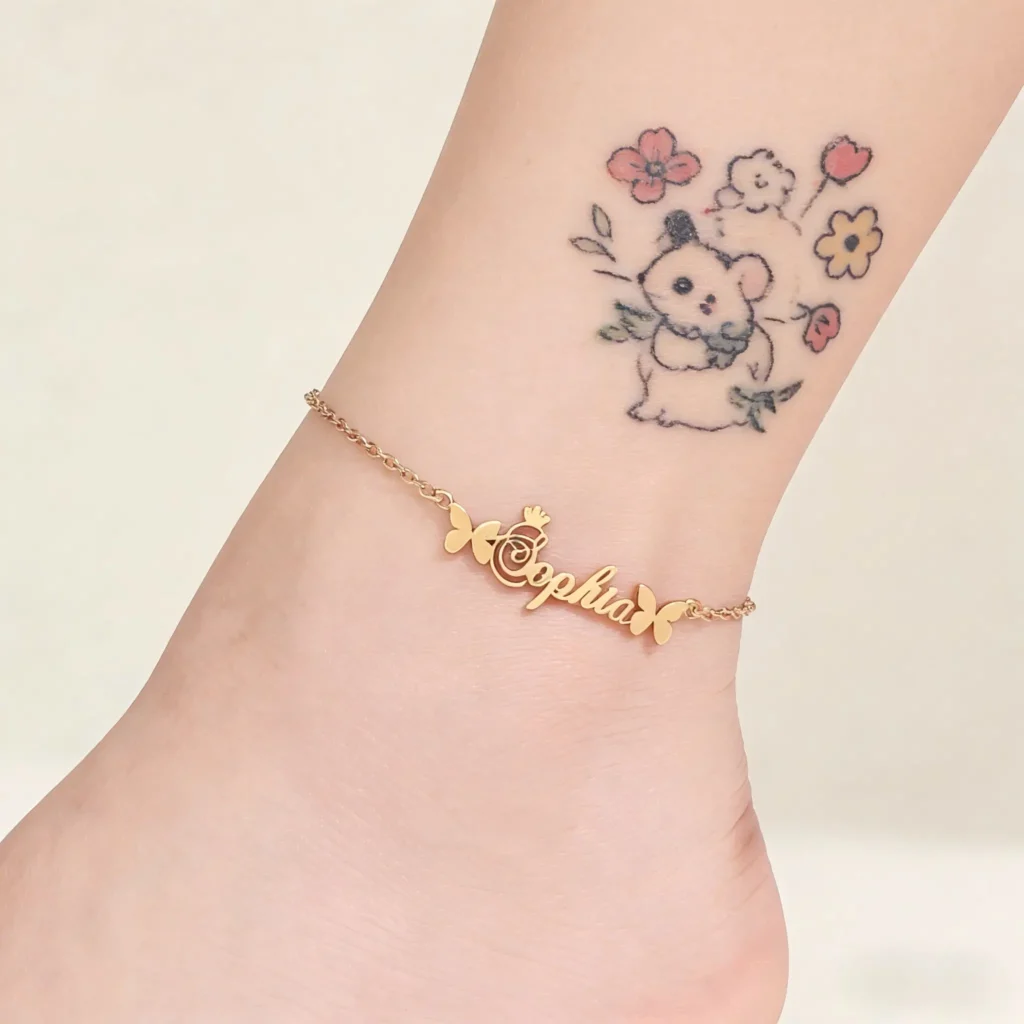
Tattooed Feet:
Does Body Art Actually Affect Sales?
Yes — with conditions. Tattoos don’t automatically increase sales, but they do create differentiation in a crowded market. Creators who commit to a clear tattooed aesthetic and position themselves consistently tend to build more loyal buyer bases than generalists. The tattoo itself is less important than what you do with it visually and how clearly you communicate your niche.
- The psychology behind why buyers seek tattooed content
- 8 buyer types who actively seek tattooed feet
- Natural vs tattooed feet: what the market actually shows
- How tattoos affect your brand identity as a creator
- How to build a tattooed feet brand step by step
- Common mistakes tattooed creators make
- Frequently asked questions
Most discussions about selling feet content focus on technique — lighting, angles, pricing, platforms. What gets less attention is the question of differentiation: why a buyer chooses your content over the thousands of other creators in the same space.
Tattoos are one of the clearest answers to that question. A distinctive piece of ink on an ankle or sole is immediately recognisable. It signals a specific aesthetic, attracts a specific type of buyer, and gives your content a visual identity that photos of natural feet simply can’t replicate — not because one is better, but because they speak to different audiences entirely.
This guide is for creators who already have tattoos and want to understand whether and how to build around them, and for those considering whether this niche is the right positioning for their content strategy.
The Psychology Behind Why Buyers Seek Tattooed Content
Tattoos carry meaning well beyond their visual appearance. For many people, body art represents confidence, self-expression, and a deliberate relationship with one’s own appearance. That emotional charge translates directly into content: buyers who seek tattooed feet aren’t just looking for decoration — they’re responding to what the ink communicates about the person wearing it.
Alternative aesthetics have grown steadily in mainstream visibility over the past decade, and that shift has moved into content buying behaviour. Buyers who might once have settled for generic content increasingly seek creators whose look matches a specific cultural signal — gothic, minimalist, bohemian, or otherwise. A well-positioned tattooed creator gives those buyers exactly what they’re looking for, which is why niche loyalty in this segment tends to run deeper than in the broader market.
The core dynamic: A buyer who finds a creator whose tattoos match their specific aesthetic preference doesn’t just buy once — they return, follow, and often become the kind of high-value repeat customer who requests custom content. That loyalty is the real commercial argument for building around your ink rather than treating it as a neutral element of your appearance.
8 Buyer Types Who Actively Seek Tattooed Feet Content
Understanding who your buyer is before you build your content strategy saves significant time. These eight profiles represent the most consistent buyer segments in the tattooed feet niche in 2026:
Drawn to gothic-inspired aesthetics: blackwork designs, dark nail polish, dramatic ankle tattoos. Often interested in the full visual composition rather than a single feature.
Prefer thin-line designs, small symbols, and delicate art paired with soft, clean photography. The aesthetic is refined rather than bold — understated ink on well-groomed feet.
Value inked-foot content with dramatic poses, strong shadows, and alternative body modification culture. More interested in the overall aesthetic statement than any single design element.
Drawn to colourful, illustrative tattoos with character or fantasy references. Often younger buyers who respond strongly to playful and expressive aesthetics over traditional or classic styles.
Seek refined, professionally presented tattooed content. Quality of photography and presentation matters as much as the tattoo design itself. Will pay significantly more for polished creative work.
A specific and dedicated niche: buyers seeking content that highlights sole tattoos in particular. A rare look commands a genuine premium because the supply is genuinely limited.
Favour floral designs, natural light, barefoot outdoor settings, and a relaxed aesthetic. Often drawn to content that feels organic rather than staged — ink as decoration rather than statement.
Frequently request specific angles — close-up soles, detailed arch shots, specific poses that feature the tattoo prominently. Often the highest-spending segment when they find a creator who matches their exact preferences.
Natural vs Tattooed Feet: What the Market Actually Shows
This is the question most tattooed creators ask first, and the honest answer is that both work — but for different buyers, and through different mechanics. The error most new creators make is trying to appeal to both simultaneously.
- ✦Alternative lifestyle audiences
- ✦Niche fetish collectors with specific visual preferences
- ✦Artistic and creative photography buyers
- ✦Premium custom content buyers seeking exclusivity
- ✦Buyers who return based on creator identity
- ✦Mainstream fetish audiences
- ✦Traditional beauty and aesthetic buyers
- ✦Minimalist presentation preferences
- ✦Casual browsing and general catalogue shoppers
- ✦Larger addressable market, lower per-buyer loyalty
The tattooed segment is smaller in total volume, but higher in per-buyer value and repeat purchase rate. A creator who positions clearly within one of the buyer types above — and who presents their content consistently — will typically outperform a tattooed creator who tries to appeal broadly and waters down their aesthetic in the process.
The most important variable isn’t whether you have tattoos. It’s whether your branding communicates a clear point of view to the buyers who are already looking for exactly what you have.
How Tattoos Affect Your Brand Identity as a Creator
Brand recognition in content creation comes from visual consistency — the ability of a repeat buyer to recognise your content the moment they see it, before they’ve read your name. Tattoos are one of the most powerful tools available for building that recognition, precisely because they are permanent, specific, and impossible to replicate.
A creator with a distinctive floral ankle tattoo who appears in every upload has a visual signature that accumulates over time. Buyers learn to associate that specific image with a quality of content, a style of photography, a particular aesthetic. That association is what transforms one-time buyers into repeat customers — and repeat customers into the foundation of consistent monthly income.
-
✦Tattoo placement shapes your content angles. An ankle tattoo lends itself to side-profile shots and walking content. A sole tattoo creates opportunities for bottom-up framing. A toe tattoo works in close-up wiggling or polish content. Let the placement guide your strongest visual angles rather than fighting against it.
-
✦Coordinate everything around the ink. Nail colour, jewellery, lighting temperature, background tone — all of these either reinforce or undermine your tattoo aesthetic. A gothic blackwork design looks incongruous with pastel pink nails and warm lighting. Visual coherence is what separates a brand from a collection of photos.
-
✦Your style becomes a filter. When your brand is consistent, buyers who don’t match your aesthetic self-select out — and buyers who do match it find you more quickly. That filtering mechanism makes your audience smaller but more engaged and more likely to spend.
-
✦Seasonal content works differently for tattooed creators. While natural-feet content benefits from seasonal nail colours and holiday themes, tattooed creators often find that their strongest content is timeless rather than seasonal. Dark aesthetics and fine-line art don’t date the way trend-based content does.
How to Build a Tattooed Feet Brand Step by Step
A strong tattooed feet brand isn’t built by having interesting ink — it’s built through strategy, consistency, and deliberate presentation. Here’s how to approach it from the beginning:
- 1Define your aesthetic before you set up your profile
The tattooed feet niche is broad. Before creating any accounts, decide which buyer type you’re targeting. Dark gothic? Minimalist fine-line? Bohemian floral? The answer shapes every decision that follows — your username, your bio, your shooting style, and the nail colours you pair with your content. Pick one direction and commit to it.
- 2Build a profile that communicates niche instantly
Your profile name, bio, and first three photos should tell a buyer exactly what kind of creator you are within seconds of landing on your page. Choose a name that fits your aesthetic — not a generic handle. Write a bio that describes your style specifically: “minimalist ink, clean close-ups, custom angles available” says more than “tattooed creator selling feet content.” Your profile photo should feature the tattoo prominently.
- 3Choose a platform that protects you and has a verified buyer base
Work on platforms where buyers have verified payment information and transactions stay inside the system. This protects you from scams and ensures you’re spending creative energy on real customers. For tattooed creators specifically, look for platforms with category or tag systems that let buyers filter by aesthetic — that targeting is what connects niche buyers to niche creators efficiently. For a detailed breakdown of what to look for in a platform, see our feet content platform guide.
- 4Master the photography of your specific tattoo
Good tattoo photography isn’t the same as good feet photography. The goal is to capture ink detail and depth without losing the overall composition. Natural light works well for most styles — it reveals colour and line work without creating the harsh reflections that artificial light sometimes produces. Test multiple angles specifically against your tattoo’s placement. An ankle piece photographs differently from sole work. Find the two or three angles that show your tattoo at its best and make those your signature framing.
- 5Build a consistent visual identity across every upload
Consistency is what turns individual photos into a recognisable brand. Maintain a uniform tone across your photography — warm and organic, or cool and dark, or clean and minimal. Match nail colour, jewellery, and lighting to reinforce your chosen aesthetic in every single upload. Buyers will start to recognise your content before they see your name, and that recognition is the foundation of repeat sales.
- 6Engage professionally and offer custom content deliberately
Tattooed creators often attract buyers who want very specific content — a particular angle of a particular tattoo, a specific pose that features the ink prominently. Custom requests in this niche can command a significant premium precisely because the buyer is paying for something they can’t get from a generalist creator. Respond quickly, communicate your rates and boundaries clearly, and use the base-plus-per-minute pricing model to keep quotes consistent. For pricing guidance, see our complete feet video pricing guide.
- 7Extend your brand beyond a single platform carefully
As your catalogue grows, a separate anonymous social presence — X, Reddit, or a niche community — can drive buyers to your main platform profile. Keep personal information entirely absent from these accounts and never link to personal social media. Your brand identity should be self-contained and distinct from your personal identity at every level. The goal is reach, not exposure.
Jewellery is one of the most consistent brand-building elements available to foot content creators — it appears in every shot, it pairs directly with your tattoo aesthetic, and buyers notice it. A custom name anklet with free engraving is a detail that compounds over time into a recognisable signature.
Shop Name Anklets →Common Mistakes Tattooed Creators Make
Tattooed feet content has real commercial potential — but a few consistent errors prevent many creators from realising it:
- Poor lighting that obscures the tattoo detail
The whole point of tattooed content is the ink. If the lighting is too dark, too harsh, or positioned behind the subject, the detail that makes the content worth buying disappears. Test your lighting against your specific tattoo before committing to a setup. What works for general feet photography may not work for detailed blackwork or fine-line colour.
- Trying to compete with natural-feet creators on their own terms
Tattooed creators who downplay their ink in an attempt to appeal to mainstream buyers end up with a neither-nor positioning — not distinctive enough for niche buyers, and not clean enough for mainstream ones. Your tattoo is your differentiator. Hiding it to broaden your appeal almost always produces the opposite effect.
- Inconsistent visual presentation across uploads
A gothic aesthetic paired with pastel nails and warm-toned lighting sends conflicting signals. Buyers trying to identify creators who match their preferences rely on visual consistency to make that assessment. If your uploads don’t hold together aesthetically, you lose the recognition benefit that makes tattooed content valuable in the first place.
- Not tagging or communicating the niche clearly
On any platform with a search or discovery function, tags and bio keywords are how niche buyers find niche creators. “Tattooed,” “blackwork,” “ankle ink,” “sole tattoo” are not just descriptions — they’re the terms buyers are actively searching. A tattooed creator who doesn’t use these terms is invisible to the buyers most likely to spend money with them.
- Treating tattoos as background rather than subject
Some tattooed creators film content exactly as a non-tattooed creator would, with the tattoo simply present in frame rather than featured. Buyers who come specifically for tattooed content notice this immediately. Close-up framing, deliberate angles that showcase the ink, and content that puts the tattoo at the centre of the visual composition is what separates a tattooed creator from a creator who happens to have tattoos.
Frequently Asked Questions
The Bottom Line
Tattoos don’t automatically make feet content sell better. What they do is create a foundation for differentiation that’s genuinely difficult for non-tattooed creators to replicate. In a market where visual distinctiveness is a commercial advantage, ink is a starting asset — but only if you build around it deliberately.
The creators who earn consistently in this niche aren’t necessarily the most heavily tattooed. They’re the ones who identified a specific buyer type, built a consistent visual identity around their ink, and showed up reliably for the audience that was already looking for exactly what they have.
If you’re still working through the foundational steps — how to set up safely, price your content, and avoid the common pitfalls — start with our complete guide to selling feet pics and our anti-scam guide for foot content sellers.