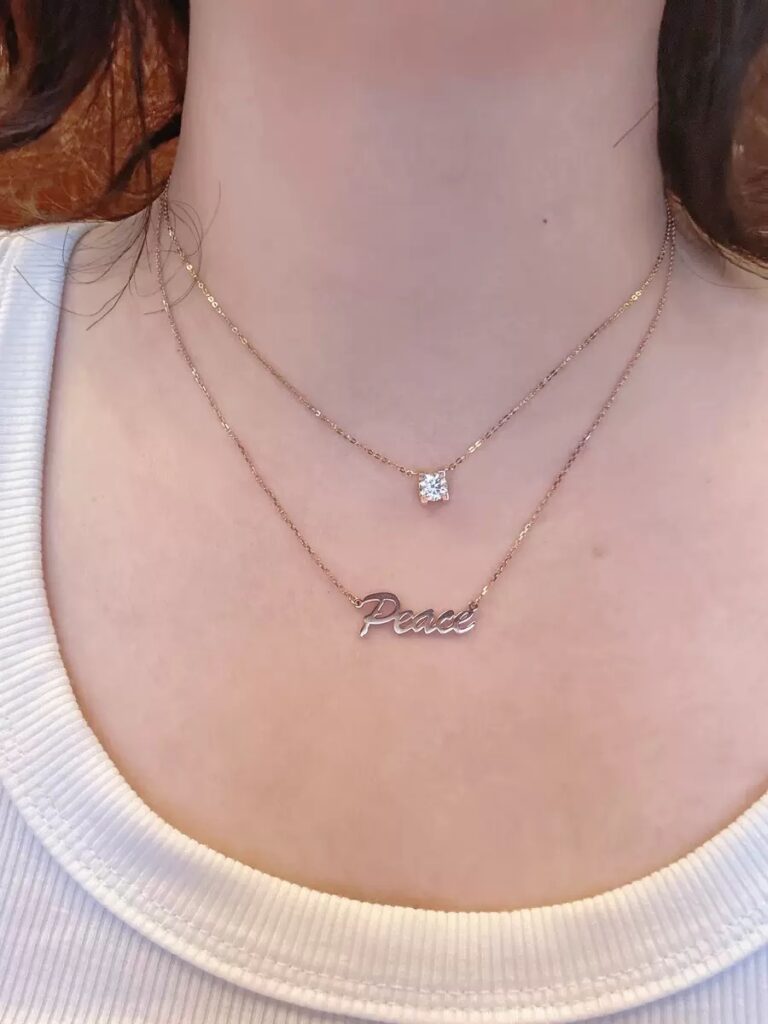
Jewelry Care Guide
How to Keep Necklaces
from Tangling — For Good
Tangled necklaces are one of those problems that feels like your fault but mostly isn’t. Fine chains tangle because of physics — they’re flexible, they move, and any movement in a confined space creates loops that close into knots. The good news is that most tangling is preventable with a few simple habits, and this guide covers all of them. Whether you’re trying to keep a fine name necklace from knotting in your jewelry box, stop your layered chains from tangling while you wear them, or pack for a trip without coming home to a mess — there’s a practical solution for each situation.
This guide covers three separate scenarios: storing necklaces, wearing and layering them, and travelling with them. Each has different solutions. Skip to the section that applies to your situation, or read through all three.
A 2015 study published in Scientific Reports found that flexible cords spontaneously form knots when jostled — the same physics that causes headphone cables to tangle. Fine jewelry chains behave identically. The thinner and more flexible the chain, the faster it tangles. This is why your fine gold necklace always seems to knot overnight and your chunky chain never does.
How to Store Necklaces
Without Them Tangling
Most necklace tangling happens during storage — in drawers, jewelry boxes, or travel pouches where chains are in contact with each other and get jostled around. These methods stop the problem before it starts.
The most effective long-term storage solution. A wall-mounted hook rail, a tabletop jewelry stand, or even a row of small Command hooks gives each necklace its own space. Hanging keeps the chain straight, prevents contact with other pieces, and makes it easy to see your collection at a glance. If you have the wall space, this is the best option by far.
Clasp the necklace before hanging so the chain forms a closed loop and doesn’t slip off.A jewelry box with individual sections — or a drawer organizer with dividers — keeps each chain from touching its neighbours. The key word is “individual”: two necklaces in the same compartment will tangle with each other just as reliably as they would loose in a drawer. Each piece needs its own space.
If you don’t have a divided box, small zip-lock bags work just as well — one necklace per bag, clasp hanging out of the top.Thread one end of the necklace through a drinking straw until the clasp comes out the other side. Fasten the clasp. The straw holds the chain straight and prevents any part of it from looping back on itself. Works especially well for delicate fine chains. Store strawed necklaces flat in a drawer or box. Cardboard tubes from paper towels or toilet rolls work the same way for thicker chains.
Use paper or reusable silicone straws if you want a more eco-friendly version of this method.An unclosed chain is a loop waiting to happen. Fastening the clasp before you put a necklace away creates a closed circuit — the chain can still move, but it has much less opportunity to knot. It takes two seconds and makes a noticeable difference, especially for fine chains. Make it a habit every time you take a necklace off.
If you don’t have hooks or compartments, laying necklaces flat — each one spaced apart, not touching — is significantly better than letting them pile up. A flat tray or dish works for this. The chain can’t form a loop when it’s lying flat against a solid surface. Not the most elegant solution, but it works if you’re between proper storage options.
How to Layer Necklaces
Without Them Tangling While You Wear Them
Layering necklaces while wearing them is a different problem from storage tangling. Here the issue is chains moving, crossing, and catching on each other throughout the day. These are the methods that actually prevent it.
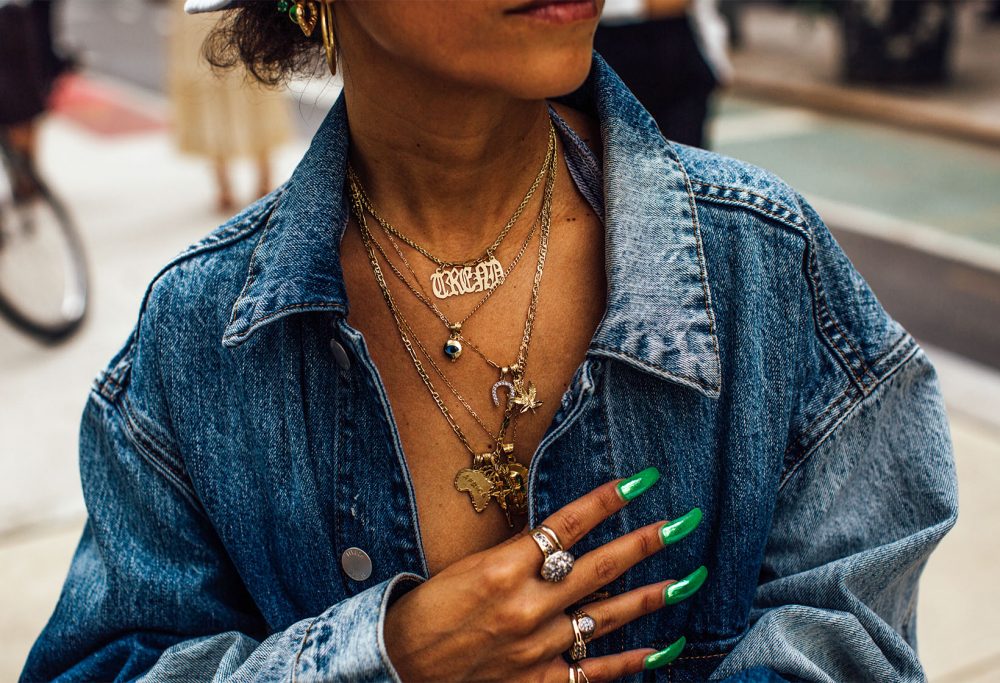
The most reliable way to keep layered necklaces from tangling while wearing them. If two chains are the same length or within an inch of each other, they’ll cross constantly. Space them clearly — 16″, 18″, and 20″ is a good three-piece combination — and each chain has its own level to sit at. They move independently rather than catching on each other.
The length difference is the single most effective anti-tangle technique for worn layering.A layering clasp — also called a necklace separator or spacer — connects multiple necklaces at the back of the neck through a single attachment point, keeping them evenly spaced and preventing them from crossing. It’s the most foolproof solution for wearing three or more chains simultaneously. Available in most jewelry and accessories stores for a few pounds.
A heavier chain and a fine chain at similar lengths don’t tangle with each other as easily as two fine chains do, because the heavier piece sits more firmly in place and doesn’t drift into the lighter one. If you’re layering, mixing a slightly chunkier chain with a fine pendant chain creates natural separation beyond just the length difference.
Night is when most layering tangles actually happen. Moving in your sleep causes chains to cross, loop, and pull tight into knots that are significantly harder to undo than a simple crossed chain. Fine chains worn to bed almost always come off worse for it. The simplest prevention: unclasp before you sleep. This also extends the life of the pieces.
Exception: a single necklace — particularly a waterproof, tarnish-free one like our name necklace — can be worn to bed without issue. The tangling risk is mostly with multiple chains together.The most effective way to avoid layering tangles entirely is to wear one piece that does the job alone. A name necklace engraved with your name, a date, or someone else’s name is a complete statement by itself — it doesn’t need backup chains to look intentional. One piece never tangles with another piece, because there isn’t another piece.
“The easiest way to prevent layered necklaces from tangling while wearing them is to make each layer count. Two necklaces chosen deliberately tangle less than five chosen impulsively — and they look better too.”
 Part 3 of 3 · Travel
How to Travel with Necklaces
Without the Knot Disaster
Travel is when necklace tangling is at its worst — jewelry gets jostled in bags, packed into pouches together, and comes out the other end in a state that takes twenty minutes to fix. These methods prevent it.
Knowing how to store necklaces for travel is a separate skill from knowing how to store them at home. At home, hanging works perfectly — but you can’t hang a necklace in a suitcase. The methods below are specifically designed for transit: compact, reliable, and effective even when your bag gets thrown around.
Thread each necklace through its own straw before packing. Clasp the ends. Strawed necklaces can be packed together without tangling because the straw prevents any looping.
One necklace per small bag, clasp hanging out of the top. Packs flat, takes up minimal space, and keeps every chain completely isolated from the others.
Lay the necklace on a sheet of plastic wrap and roll it up. The wrap holds the chain in place so it can’t shift or loop during transit. Unroll when you arrive.
The simplest solution: wear your necklace during travel rather than packing it. A single necklace on your neck can’t tangle with anything. Especially practical for a waterproof, tarnish-free piece you can wear through the entire trip without removing.
How to Untangle a Necklace
Without Making It Worse
If the knot is already there, patience is the most important tool you have. Pulling at a tangled chain tightens the knot. Here’s the method that actually works.
Don’t try to untangle it in the air — gravity makes it worse. A table or countertop gives you a flat surface to work on and lets you see the knot clearly.
Insert the tip of a sewing pin or safety pin into the centre of the knot. Wiggle gently to create space in the loop. Don’t pull the chain — work the pin into the knot and move it outward to loosen. A toothpick or earring post works in a pinch.
A tiny drop of baby oil or olive oil on the knot lubricates the links and lets them slide past each other more easily. Work the pin in after applying. Rinse the necklace gently afterward with warm water and let it dry flat.
This sounds odd, but it helps. Frustration causes you to pull harder, which tightens the knot further. Set it aside for ten minutes, come back fresh. Most knots that seemed impossible to fix are straightforward after a short break and a calmer approach.
Necklace Types by
Tangle Risk
Not all chains are equally prone to tangling. The link style and chain weight both affect how easily a necklace knots — which is useful to know when buying or layering.
Fine chains — including the kind used for delicate name necklaces — sit in the higher-risk category because they’re lightweight and flexible. The solution isn’t to avoid them, it’s to store them individually and, ideally, wear them as a single piece rather than layered with other fine chains.
Worn Every Day, Never Needs to Come Off
One of the simplest ways to avoid necklace tangling is to wear a piece that never needs to come off — so it never goes into a drawer, a bag, or a travel pouch. Our custom name necklace is waterproof, tarnish-free, and eco-friendly enough to wear through showers, the gym, and travel without removal. If it’s always on you, it’s never tangling in your jewelry box.
- 💧Waterproof — shower, swim, wear through everything. No removal needed.
- ✨Tarnish-free — stays looking the same whether it’s on your neck or off it.
- ✍️Free engraving — any name, date, or initial. One piece that means something.
- 🌿Hypoallergenic — safe for daily skin contact, no reactions from continuous wear.
The Short Version —
What Actually Prevents Tangling
Store necklaces individually — hanging is best, separate compartments or bags are the alternative. Use the straw method for storage or travel. Layer with clearly different lengths, use a separator clasp if you regularly wear three or more chains. Take layered necklaces off before sleeping. And if a knot has already formed, a pin and patience will fix it almost every time.
The simplest long-term solution is also the most obvious: own fewer necklaces, choose them more deliberately, and wear each one as a complete statement rather than part of a pile. One necklace that genuinely means something — engraved with a name or a date — is harder to justify removing at the end of the day than a decorative piece, which means it spends less time in storage and less time tangling.
Waterproof, Engraved,
Never Needs to Come Off
Eco-friendly, hypoallergenic, tarnish-free custom name necklaces. Free engraving on every piece.
✦ Free engraving · Waterproof · See the full collection