What Makes Feet Photos
Look Professional?
Professional feet photos come down to six elements: well-groomed skin, soft consistent lighting, sharp focus, intentional composition, a clean background, and a consistent visual style.
None of these require expensive equipment. They require preparation and attention — both of which are free.
The difference between a feet photo that sells quickly and one that sits in a catalogue unnoticed is rarely about the feet themselves. It’s about everything surrounding them: the light source, the background, the framing, the skin condition, and whether the image looks like it was taken with intention or captured by accident.
Buyers in this market are paying for an experience. A professional image delivers that experience before a single word is read. An amateur image interrupts it before the buyer has a chance to engage. Understanding what produces the first outcome — and building it into a consistent workflow — is what separates creators who earn reliably from those who upload the same quality content and wonder why sales are inconsistent.
This guide breaks down each element of professional feet photography, explains why it matters to buyers specifically, and gives you the practical steps to achieve it with whatever equipment you already have.
The 6 Elements of Professional Feet Photography
In feet photography specifically, the skin condition is the product. Rough patches, dry heels, unkempt cuticles, and chipped polish aren’t just aesthetic details — they’re what the buyer is evaluating before deciding whether to purchase. A camera captures everything. Skin that looks fine in a room often reads as noticeably rough on screen, which is why pre-shoot grooming is a non-negotiable step rather than a cosmetic afterthought.
Beyond the immediate visual, well-presented feet signal effort and respect for the buyer’s experience. Creators who invest in their appearance before shooting consistently receive better engagement, more custom requests, and higher repeat purchase rates than those who don’t.
Build a 10-minute pre-shoot routine: exfoliate lightly with a pumice stone, apply foot cream and massage it in fully, refresh nail polish if needed, and apply a light oil just before shooting for surface shine. Moisturised skin with a slight sheen photographs completely differently from dry skin — and buyers notice immediately. For a full routine, see our 7-day soft feet guide.
Lighting is the most impactful single variable in feet photography — more than the camera, more than the background, more than the pose. Harsh lighting creates unflattering shadows that obscure skin texture and make details look rough. Soft, directional light from one consistent source brings out skin quality, makes nail polish appear more vivid, and gives the overall image a clean, high-value feel.
The easiest way to understand good lighting is by comparison. Take the same shot under a harsh overhead ceiling light, then again near a window with diffused natural daylight. The second image will look like it was taken by a professional. The lighting did all of the work.
Natural window light is the most reliable starting point — position the foot so the light hits from the side rather than directly above, which creates flattering dimension. If shooting without natural light, a ring light at daylight temperature (5000–6000K) is the most consistent artificial option. Never mix light sources in the same shot — the conflicting colour temperatures create casts that are difficult to correct in editing.
Buyers in this market zoom in. They’re evaluating fine details — skin texture, nail edges, the quality of a tattoo or jewellery — that only appear clearly in a sharp image. A slightly blurred photo doesn’t just look less professional; it actively removes the specific detail that creates desire. A buyer who can’t see what they’re paying for doesn’t buy.
The most common causes of blur are camera shake from handheld shooting and missed focus on a moving subject. Both are straightforwardly preventable, and neither requires a better camera to fix.
Use a tripod or flexible phone mount — this eliminates camera shake entirely. Tap the screen to set focus on the specific area of the foot that should be sharpest before capturing. Use your phone’s timer or a remote shutter button to avoid introducing shake at the moment of pressing the shutter. Always shoot at maximum resolution using the rear camera, not the front-facing lens.
Composition is what separates a photo that was taken from a photo that was made. When the angle is chosen deliberately, when the foot sits with intention within the frame, and when negative space is used thoughtfully rather than accidentally, the image reads as professional — even to a buyer who couldn’t articulate why. Conversely, random angles, unintentional cropping, and off-centre subjects immediately signal that the shot wasn’t planned.
Framing also controls what the buyer notices first. A well-composed image directs the eye exactly where you want it — to the detail you want to highlight. A poorly composed image scatters attention.
Decide on the angle before you start shooting. Apply the rule of thirds — place the foot slightly off-centre rather than dead in the middle of the frame. Leave intentional negative space around the subject. Test two or three angles for each shot and choose the strongest one. The decision of where to place the subject within the frame should be made consciously, not discovered by accident.
The background is everything in the frame that isn’t the subject. Its job is to disappear — to recede visually so that the feet remain the unambiguous focal point. A cluttered or busy background divides attention, reduces the premium feel of the image, and makes even well-groomed feet look like an afterthought. A clean surface signals that the creator controls their environment and thought about what the buyer would see.
Clean doesn’t mean clinical. A textured linen sheet, a warm wooden floor, a marble surface — all of these work well because they add visual context without competing with the subject.
Before setting up the camera, scan the frame for anything that doesn’t belong. Remove objects from the background, straighten bedding or fabric, and check that no identifying personal items have crept into the shot. The most effective backgrounds are neutral in tone and simple in texture — cream, white, grey, warm wood, or soft fabric. Check the background again after shooting, at full image size, before uploading.
A single professional image attracts a single sale. A consistently professional profile builds a loyal buyer base. When every image a buyer sees on your profile looks like it belongs to the same visual world — same lighting temperature, same background palette, same quality of grooming — they develop trust in you as a creator. That trust is what drives custom requests, bundle purchases, and the repeat orders that produce stable monthly income.
Consistency also builds recognition. On platforms where buyers scroll through many creators, a distinct and recognisable aesthetic means your content is identifiable before a buyer even reads your name. That recognition compounds over time into the kind of brand loyalty that is very difficult for a generalist creator to achieve.
Choose one lighting setup, one or two background options, and one colour palette for nail polish and accessories, then stick to them. This doesn’t mean every image looks identical — it means they all feel like they came from the same creator. Set up a dedicated shooting space if possible so you don’t have to reconstruct your environment each session. Consistency is a workflow habit, not a creative limitation.
The underlying principle: Professional feet photography isn’t about equipment. It’s about preparation and intention. The same feet, photographed in the same location with the same phone, will look significantly different depending on whether these six elements are in place. Every one of them is learnable, and none of them requires spending money.
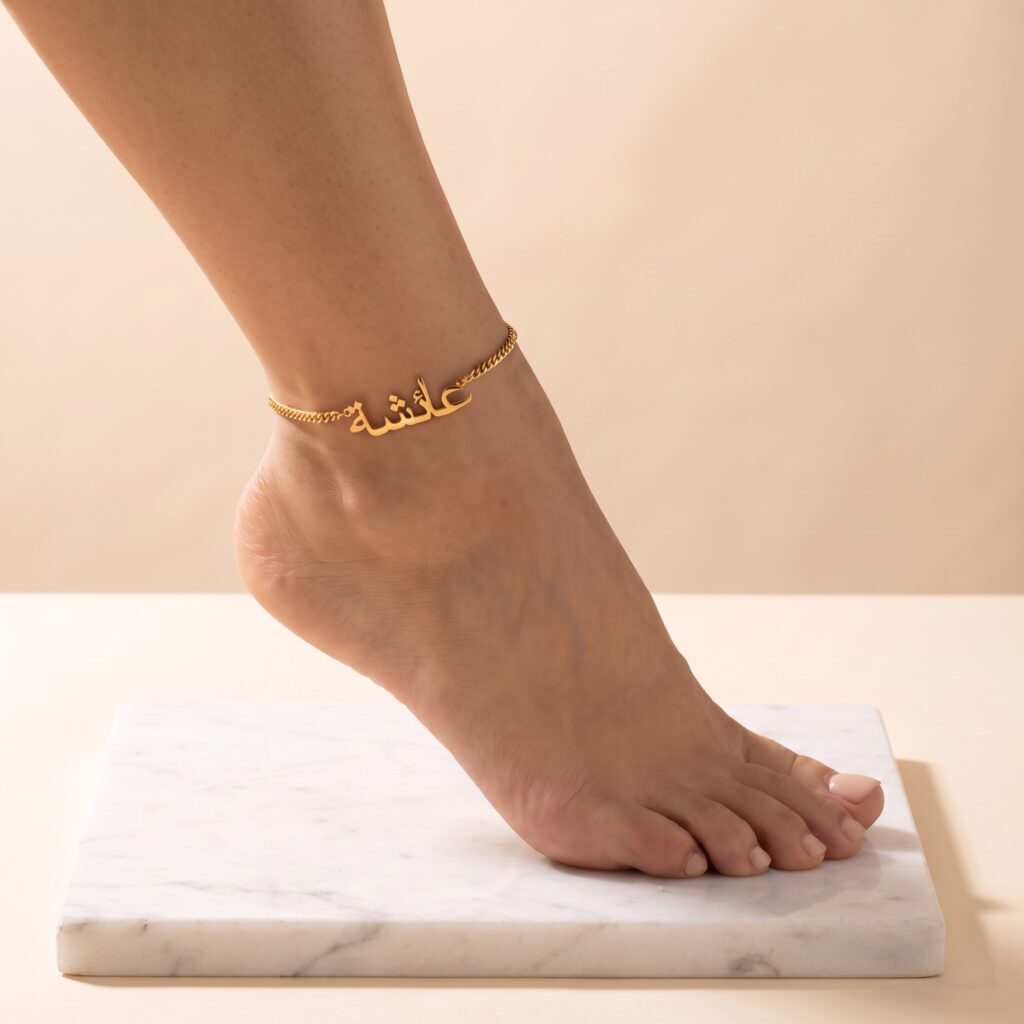
A clean gold anklet placed intentionally in frame tells a buyer that every element of the image was considered. It adds visual interest, reinforces a consistent aesthetic, and consistently appears in the professional feet photography that earns the highest per-image prices.
Shop Name Anklets →How Image Quality Directly Affects Sales
Improving image quality doesn’t just make your profile look better. Each element above has a specific and measurable effect on buying behaviour:
| Element | Effect on buyer behaviour |
|---|---|
| Well-groomed skin | Increases perceived value of the content; drives custom requests from buyers who want to see specific angles of well-maintained feet |
| Soft, even lighting | Reduces buyer hesitation — images where detail is clearly visible convert at significantly higher rates than dark or shadowed shots |
| Sharpness and focus | Enables buyers to evaluate what they’re purchasing; blur is one of the most common reasons buyers pass on content that otherwise meets their preferences |
| Intentional composition | Signals professionalism at first glance; buyers who encounter well-composed profiles are more likely to explore the full catalogue rather than moving on |
| Clean background | Removes visual competition for attention; images with simple backgrounds allow buyers to focus on the subject, which is where desire is generated |
| Consistent style | Drives repeat purchases and bundle sales; buyers who recognise and trust a creator’s aesthetic return and spend more per visit than first-time buyers |
Professional Quality Justifies Premium Pricing
One of the clearest commercial benefits of professional-quality images is pricing power. Buyers evaluate perceived value from the image before they look at the price. When an image looks polished, intentional, and consistently high quality, buyers expect to pay more — and they will.
The inverse is equally true. An image that looks hastily shot, poorly lit, or inconsistently styled signals lower value regardless of the actual quality of the content. Creators who improve their image quality without changing anything else about their catalogue routinely find they can raise prices and maintain or increase sales volume, because the buyers who respond to professional content are also less price-sensitive than bargain-seeking buyers.
- ✦Raise prices incrementally as quality improves. Don’t wait until you feel “ready” — the right time to test a higher price point is when your images are consistently meeting the six standards above. Buyers who value quality will follow the increase.
- ✦Use your best images as your profile and preview photos. First impressions are formed in under two seconds. The images buyers see first determine whether they explore further. Your highest-quality shots should be the most visible ones.
- ✦Create bundles around your strongest content. A set of consistently professional images has more perceived value than the same number of inconsistent ones. Bundle pricing rewards buyers who want more and gives you a higher per-image return than individual sales.
- ✦Use quality as a filter, not a threshold. You don’t need every image to be perfect before uploading — you need every image you upload to meet a consistent standard. Review before uploading. If an image doesn’t meet that standard, reshoot it rather than lowering the bar.