
How to Sell Feet Videos in 2026:
A Practical Guide for New Creators
Feet videos sell for roughly $15 to $200+ depending on length, format, and whether it’s a custom request. The highest-earning formats are custom videos, ASMR clips, and lotion application. A modern smartphone, a $15 tripod, and a quiet, well-lit room is all you need to start. Most beginners on verified platforms see their first payout within the first month of consistent uploads.
- Why feet videos outsell photos
- 8 video types that consistently sell (with price ranges)
- Feet video pricing in 2026, by experience level
- Equipment you actually need
- How to film footage that looks professional
- Editing in under ten minutes
- How to choose a platform and get started
- How to actually get sales, not just uploads
- Safety, anonymity, and boundaries
- Frequently asked questions
Photos are how most creators enter this niche. Videos are how they stay in it.
A still photo sells once, maybe twice, at a fixed price. A 90-second clip with movement, sound, and personality can sell for two to five times that amount — and the same buyer often comes back for more. Across every major feet-content marketplace, video has quietly become the format that builds repeat customers and steady monthly income. This guide is for anyone thinking about adding video to their catalog, or starting fresh with video as the primary product.
No exaggerated income screenshots. No “make $10K in a week” angles. Just what works in the current market.
Why Feet Videos Outsell Photos (and Will Keep Doing So)
Buyers in this niche are paying for an experience. A photograph is a single moment frozen flat. A video carries movement, audio, texture, and timing — all of which compound the perceived value. The market has priced that accordingly. Video content typically sells at roughly 2x to 5x the cost of comparable photo content.
A photo set at $15 becomes a video at $35 to $75. A custom photo request priced at $60 becomes a custom video request priced at $120 to $200. There’s also a behavioral pattern worth noting: buyers who purchase a video from a creator are significantly more likely to return. That’s where consistent monthly income comes from — not viral one-off sales, but repeat buyers who recognize your style.
If you’ve already been selling feet pictures and want to understand how pricing across the full range of content works, our complete guide to selling feet pics covers the photo side of the same market in depth.
8 Types of Feet Videos That Sell in 2026
Below are the video formats that have stayed in steady demand across feet marketplaces. Each one is broken down with what you actually need to know before producing it.
Audio-focused clips where sound is as important as visuals: tapping, scratching, crinkling, rubbing, brushing. Often watched with headphones. The visual bar is lower than almost any other format — what matters is the recording quality.
One of the most loyal sub-niches in feet content. Listeners are repeat buyers and will pay a premium for clean audio.
A quiet room and at least a basic clip-on mic. Phone audio works but caps your earning potential in this format.
Honest take: Most beginners overdo the visuals and underdo the sound. ASMR buyers will forgive average lighting before they forgive a noisy room.
Barefoot walking across different surfaces: hardwood, tile, sand, carpet, grass. The appeal is natural movement and sole flex that a photo cannot capture. One of the lowest-effort formats with consistent demand.
Easy to film, easy to repeat, broadly appealing. A single afternoon can produce four or five usable clips on different surfaces.
Public outdoor filming carries privacy risks. Keep faces and identifying landmarks out of frame at all times.
Honest take: Batch filming saves hours later. Shoot multiple surfaces in one session rather than returning to set up repeatedly.
Slow, deliberate application of lotion, oil, or moisturizer to feet and toes. The glistening visual paired with the application sounds is the appeal. One of the most consistently requested video types across platforms.
Combines visual and audio appeal in a single clip. Broad buyer interest — works for fetish-niche viewers and beauty content fans alike.
Greasy hands make mid-shoot camera adjustments difficult. Set up everything — angles, lighting, props — before applying anything.
Honest take: The product itself matters less than how it reads on camera. A clear oil or thick white lotion both work. Anything tinted or watery tends to look off on film.
Close-up clips of toe movements: spreading, wiggling, scrunching, curling, flexing. Zero props, zero setup beyond decent lighting. The lowest barrier to entry in the entire format catalog.
Anyone with healthy nails and basic grooming can produce these. Repeat buyers love them because they’re short, focused, and easy to collect.
Lower price ceiling than other formats. Volume strategy is more practical than premium pricing for this type.
Honest take: Many successful sellers start here. The format teaches you everything about angles, lighting, and editing before you scale into higher-priced video types.
Filming yourself painting nails, soaking, exfoliating, filing, or applying a mask. Doubles as get-ready-with-me content and crosses into wellness aesthetics — broadening audience appeal beyond core buyer groups.
Broad audience. The before-and-after arc provides natural structure. Seasonal themes — winter reds, summer neutrals, holiday glitter — push clips into a higher price tier with no extra effort.
Polish drying time can drag a clip out. Edit cuts are required to keep pacing tight and content watchable.
Honest take: If you already do pedicures at home, turning the routine into content costs nothing extra. Plan around the calendar for the easiest seasonal pricing bump.
Putting on and removing different footwear: heels, sneakers, sandals, socks, stockings, thigh-highs. The reveal is the appeal. A highly reusable format — the same five pairs can produce ten clips across different angles, lighting, and contexts.
Scales with wardrobe variety rather than filming hours. Strong repeat-buyer engagement once you build a recognizable style.
Initial wardrobe investment if your collection is limited. Thrift stores fix this for under $30 and often provide more character than new pairs.
Honest take: Worn-in shoes tend to outperform new ones. Buyers respond to character. A scuffed loafer reads as authentic; a perfect new pump can feel staged.
Pure sole content: arches, heels, wrinkled soles after standing, dirty soles after walking barefoot. POV-style framing is common. Sole-focused buyers tend to be high-spending and loyal once they find a creator whose feet match their preference.
Very specific buyer demand. Specialization pays — a creator known specifically for soles will outperform a generalist who occasionally posts this content.
Requires deliberate angle planning. A tripod or angle stand is essentially mandatory for the bottom-up framing this format relies on.
Honest take: Specializing in this format and building a reputation for it will consistently outperform broader posting habits, even with comparable feet.
Videos filmed to a specific buyer’s instructions: chosen pose, surface, action, outfit, or scenario. The buyer pays for exclusivity, not just access. This is the highest-margin format in the catalog and the one that builds the most loyal long-term buyers.
Highest earning per piece. Buyers who pay for customs are emotionally invested and typically return monthly. Turnaround time of 24–72 hours is the standard expectation.
Boundary management is essential. Have a clear list of what you will and won’t film, state it upfront, and stick to it without exception.
Honest take: The simplest pricing model that works — base rate plus per-minute rate. For example: $30 base + $12 per minute. A 5-minute custom comes out to $90. Fair, predictable, easy to quote without negotiating every time.
Feet Video Pricing in 2026 (By Experience Level)
Prices below reflect typical ranges across verified feet-content platforms in early 2026. Your actual rate depends on your audience, niche specialization, and the strength of your visual style.
| Video Type | Beginner | Intermediate | Established |
|---|---|---|---|
| Short clip (1–2 min) | $10 – $20 | $20 – $40 | $40 – $75 |
| Standard video (3–5 min) | $20 – $35 | $35 – $65 | $65 – $120 |
| Long video (5–10 min) | $30 – $50 | $50 – $100 | $100 – $200 |
| ASMR video (any length) | $25 – $45 | $45 – $80 | $80 – $150 |
| Custom video (1–3 min) | $30 – $50 | $50 – $100 | $100 – $200 |
| Custom video (5–10 min) | $50 – $100 | $100 – $175 | $175 – $400+ |
A practical bundling principle: offer three videos at a 15–20% discount over individual prices. Buyers convert at a higher rate when they see a “set” offering, even when the per-clip discount is modest.
Equipment You Actually Need
Most advice in this space pushes expensive cameras and lighting setups. Very little of it is necessary. Here’s what genuinely makes a difference:
-
Your phone Free
Any iPhone 12 or newer, or a modern Android flagship, shoots excellent 1080p video. Always use the rear camera — image quality is noticeably sharper than the selfie cam. -
Phone tripod or flexible mount $12 – $25
The single highest-ROI purchase you can make. Handheld footage looks amateur and limits what angles you can reach. A GorillaPod-style mount lets you set up any angle hands-free. -
Ring light or desk lamp $15 – $40
Soft, front-facing light flatters the skin and removes harsh shadows. A window with diffused daylight works equally well at no cost. -
Clip-on microphone $15 – $30
ASMR content only. Phone mics are adequate for every other format. Don’t buy this unless you’re specifically producing audio-led clips.
Total realistic starter cost: $25 to $95. Anything more is preference, not necessity.
How to Film Feet Videos That Look Professional
Eight habits that consistently separate clean, sellable content from amateur footage:
- 1Always use a tripod
Locked framing is the difference between professional and homemade. It also frees both hands for lotion, props, or shoe changes — making it functionally necessary for half the formats in this guide.
- 2Shoot horizontally
Landscape orientation looks cinematic on desktop, where most buyers watch. Vertical works only for short social-media teasers pointing to your main catalog.
- 3Light from the front, slightly above
Backlighting creates silhouettes. Side lighting hides skin detail. Front-and-above is the safe default that works across every format.
- 4Move slower than feels natural
What looks slow in person looks smooth on camera. Cut your pace by roughly a third. Deliberate movement reads as intentional; natural movement often reads as rushed.
- 5Keep the background simple
A solid blanket, a clean sheet, a bare floor. Anything else competes with the subject. Buyers are paying attention to your feet — make sure nothing else draws the eye.
- 6Vary angles within a single clip
Three angles in a four-minute video — top, side, sole — feels intentional. One static angle for the full runtime feels lazy regardless of content quality.
- 7Mind the audio
Even for non-ASMR clips, turn off fans, TVs, and notifications before you start. Background hum cheapens the final product and is difficult to remove in editing.
- 8Prep your feet first
Moisturize, file rough spots, refresh polish if relevant. Video shows every detail that photo lighting can hide. Five minutes of prep saves the entire clip.
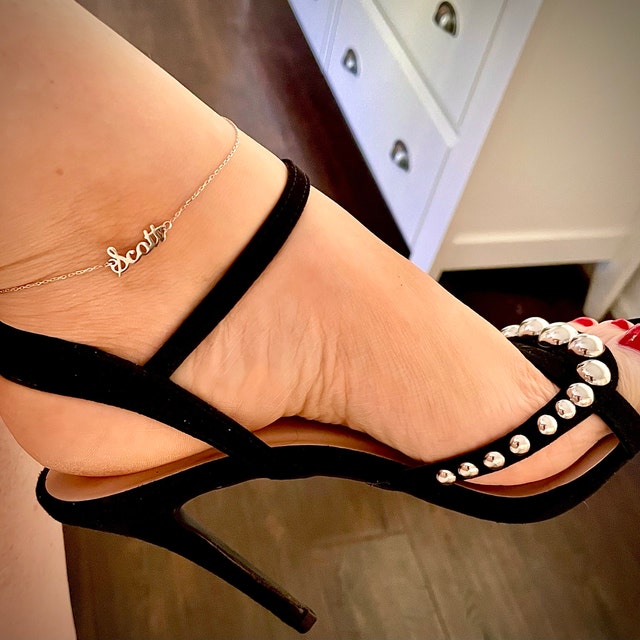
Creators who build a recognizable aesthetic — consistent lighting, consistent jewelry, consistent style — earn more per buyer over time. A custom name anklet with free engraving is a detail that appears in every clip you film and signals care in every frame.
Shop Name Anklets →Editing in Under Ten Minutes
You don’t need editing skills. You need to trim, brighten, and watermark. That’s it.
-
✦Trim the first and last two seconds — the moments where you reach for the phone. Clean entries and exits are the simplest upgrade any creator can make immediately.
-
✦Adjust brightness if the footage is dark. One slider in any phone editor handles this. iMovie, CapCut, Google Photos, and InShot are all free and adequate.
-
✦Watermark with your creator name, small and semi-transparent in a corner. This protects against unauthorized reuse and builds name recognition with every buyer who watches.
-
✦Export at 1080p. 4K creates oversized files that some platforms compress poorly or reject outright. 1080p is the standard that every platform handles correctly.
How to Choose a Platform and Get Started
Not all platforms are built the same way. The right platform protects both you and your buyers, keeps transactions inside a verified system, and doesn’t rely on you driving your own audience from scratch. Here’s what to look for before committing to one:
- ✦Buyer verification. Every buyer should have verified payment information before they can purchase. Anonymous buyers are scam risk. Verified buyers are real customers.
- ✦Seller identity verification. A platform that verifies sellers keeps out bad actors and signals to buyers that creators are legitimate — which directly increases buyer trust and conversion.
- ✦Payments stay inside the platform. Any marketplace that allows or encourages off-platform payments removes your protection entirely. All transactions should happen through the platform’s own payment system.
- ✦Clear commission structure. Most reputable platforms charge 15–25% commission on each sale. Know what you keep before you sign up. Avoid platforms where the fee structure is hidden or changes without notice.
- ✦Built-in audience, not just a hosting tool. The best platforms bring buyers to your content rather than expecting you to drive all traffic yourself. Check whether the platform has an active buyer community before investing in it as a seller.
- ✦Dispute and report mechanisms. You should be able to report problematic buyers and have real recourse if a transaction goes wrong. Platforms without clear dispute processes leave you unprotected.
Once you’ve chosen a platform, the setup process follows the same structure on most verified marketplaces:
- 1Create a seller account and complete ID verification
Most platforms require a government-issued ID and a selfie to verify you’re a real person and a legal adult. This typically takes one to three business days. Use a separate email address from your personal one.
- 2Set up your profile with a niche focus
Username, short bio, profile photo (your feet or a non-identifying image), and the specific formats or themes you’ll be posting. Niche labels drive discovery. “ASMR and lotion clips” will reach the right buyers faster than a generic profile.
- 3Upload your first batch of videos
Organize content by theme to make browsing easier. Aim for at least five to eight pieces before going live — an empty profile signals a seller who isn’t serious, and buyers move on quickly.
- 4Set prices using the table above
Start in the beginner range. It’s easier to raise prices after you’ve gathered reviews and repeat buyers than to recover from overpricing too early. Most platforms allow pricing updates at any time.
- 5Turn on custom requests and set your terms
Use the base rate plus per-minute formula. State your boundary list upfront in your bio — buyers who agree with it before messaging convert faster, and those who don’t will self-select out.
- 6Connect your payout method
Most platforms pay out on a schedule (weekly or twice monthly) via bank transfer or supported digital payment. Set this up before your first sale to avoid delays.
How to Actually Get Sales (Not Just Uploads)
Uploading is the easy part. Getting consistent sales takes a few habits that most new creators skip:
-
✦Post on a schedule. Three to four new uploads per week consistently beats a single batch upload of twenty. Platform feeds reward freshness, and buyers on active platforms see recently uploaded content first.
-
✦Use specific tags. Narrow tags pull in narrow buyer searches, which convert faster than generic ones. “ASMR tapping,” “lotion soles,” “walking barefoot” will outperform “feet” every time.
-
✦Reply to messages within 24 hours. Slow responses kill custom request conversions. Buyers asking for customs have usually messaged multiple creators simultaneously. First to respond and quote wins.
-
✦Upsell photo buyers into video. After any photo sale, a short message — “I also film clips in this style if you’re interested” — converts at a notably higher rate than cold outreach to new buyers.
-
✦Promote externally with a separate anonymous account. A dedicated X or Reddit account that links to your platform profile (never your personal social media) drives consistent external traffic without compromising your identity.
-
✦Build a recognizable style. Buyers return to creators whose aesthetic they’ve learned to recognize. Consistent lighting, consistent angles, and a consistent thumbnail style make your catalog feel like a brand rather than a random collection.
Safety, Anonymity, and Boundaries
Selling feet videos on verified platforms is legal in most jurisdictions and structurally safe when you stay within the system. The risks come from off-platform behavior. A few rules that matter more than any others:
-
✦Never accept off-platform payments. Buyers who push for Cash App, Venmo, PayPal Friends, or crypto outside the platform are almost always attempting to scam. Verified platforms exist precisely to prevent this. If a buyer insists, decline and move on.
-
✦Never share your real name, location, or personal social accounts. Your creator name is your brand. Everything else stays private, always.
-
✦Watermark every clip. Your creator name in a semi-transparent corner of every video. It builds brand recognition and discourages unauthorized reuse simultaneously.
-
✦Decline requests that cross a personal boundary. Without negotiation and without apology. Your boundary list is your operating policy. A buyer who doesn’t respect it is not a buyer worth keeping.
-
✦Trust your instincts about buyers. If a message feels manipulative, urgent in an unusual way, or is pushing you toward off-platform anything — trust that feeling. The next legitimate buyer is rarely far away.
For a deeper look at the specific scam patterns that target foot content creators — and how to identify them before they cost you — read our complete guide to staying scam-free as a foot content seller.
Frequently Asked Questions
Final Recommendations
No cost to produce. Teaches you everything about angle, lighting, and pacing before you invest in anything more involved.
Both formats upsell naturally from an existing photo audience. Familiar content, higher price point, same buyer base.
Both reward quality over quantity and attract the highest-spending buyers. Both build repeat customers more reliably than any other format.
The creators who earn consistently in this space treat it like a small business: they post on a schedule, manage messages professionally, define their boundaries clearly, and work within platforms that protect them in return. The format you choose matters less than the consistency you bring to it.
If you’re still working through the earlier steps — understanding platforms, avoiding scams, and setting up safely — start with our complete guide to selling feet pics, which covers the same foundational habits applied to the photo side of this market.