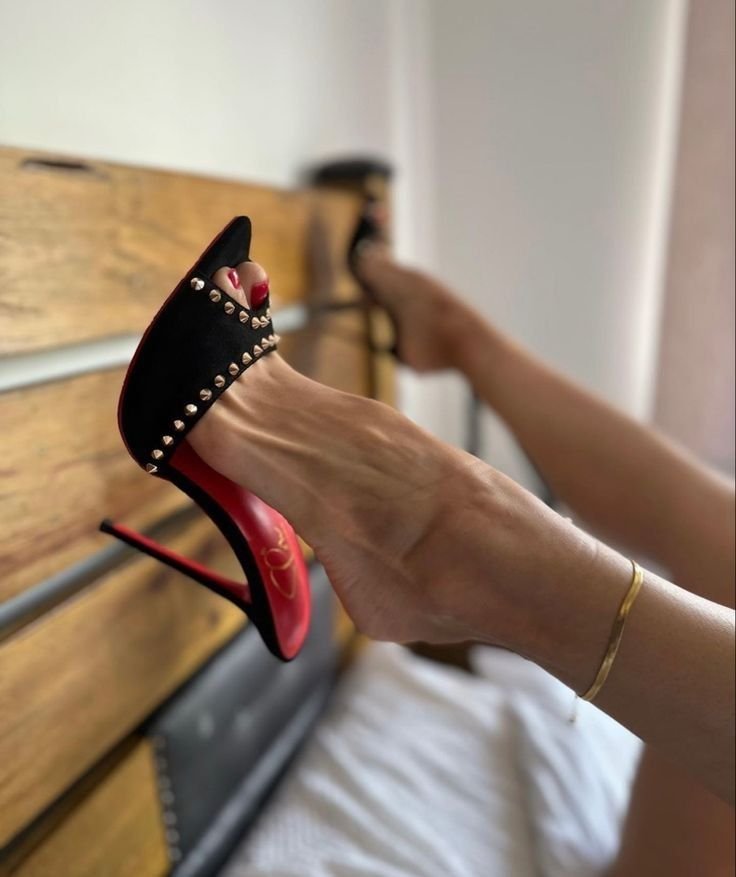
Why Men Find Feet Attractive:
History, Psychology & Aesthetics
The attraction to feet is one of the most well-documented forms of aesthetic and sensory interest across human history — and one of the least understood in everyday conversation. It’s older than the internet, better supported by neuroscience than most people realise, and far more mainstream than the stigma around it suggests.
This article examines the historical context, neurological basis, aesthetic dimensions, and cultural shift that have brought feet from the margins of conversation to a recognised subject of art, photography, and personal expression.
- Feet throughout history — art, culture, and symbolism
- The psychology and neuroscience of foot attraction
- The aesthetic appeal — what people actually respond to
- How social media changed the conversation
- Feet as a subject of creative expression
- Addressing common misconceptions
- How to engage respectfully as a buyer
- Frequently asked questions
Foot attraction is older than the internet and better documented than most people realise. It appears in ancient art, in religious practice, in centuries of cultural writing, and — more recently — in mainstream social media, dedicated photography communities, and a growing body of neuroscientific research. Yet public conversation about it tends to oscillate between dismissal and mockery, which leaves most people with a distorted picture of something that is actually both common and, on closer examination, straightforwardly understandable.
This article doesn’t argue for or against any personal preference. It examines what we actually know — from history, from brain science, from aesthetics — about why feet have attracted human attention across cultures and centuries, and what that means in the context of contemporary foot photography and content.
Feet Throughout History — Art, Culture, and Symbolism
The idea that interest in feet is a modern internet phenomenon doesn’t survive much historical scrutiny. Feet have carried symbolic weight, artistic attention, and cultural significance across civilisations that had no connection to each other.
Greek sculptors rendered feet with notable care and technical precision. The ideals of proportion and symmetry that defined their aesthetic tradition extended fully to the foot — its arch, its toe arrangement, its overall form were considered as worthy of artistic attention as any other feature of the human body.
Multiple religious traditions assigned significant meaning to the act of touching, washing, or bowing to feet. In the Christian tradition, foot washing was a deliberate act of humility and service. In various South Asian traditions, touching the feet of an elder or revered figure is a gesture of deep respect still practised today.
Renaissance painters frequently foregrounded feet in their compositions — not incidentally, but deliberately. The naturalism that defined the Renaissance approach to the human figure extended to extremities, and feet were painted with the same attention to light, shadow, and anatomical detail as faces.
Various East Asian traditions assigned aesthetic and social meaning to foot shape and presentation. Foot binding in historical China, whatever its problematic dimensions, reflected a specific cultural aesthetic around foot form that operated as a social status signal for centuries.
From classical poetry to 19th-century literature, feet appear as subjects of aesthetic contemplation with unusual frequency. References to the beauty of feet — their shape, their movement, the impression they leave — appear across literary traditions that rarely comment on other extremities with the same attentiveness.
Contemporary foot photography sits within a long tradition of artistic engagement with the human foot. What has changed is accessibility — the ability to create, share, and appreciate this kind of imagery has expanded dramatically — but the underlying aesthetic interest has deep historical roots.
The historical point: Interest in feet as aesthetically significant is not a product of the internet age. It is a recurring feature of human visual culture across civilisations and centuries. The internet made this interest more visible and more openly discussed — it did not create it.
The Psychology and Neuroscience of Foot Attraction
The most frequently cited scientific explanation for foot attraction comes from the work of neuroscientist V.S. Ramachandran, who mapped the brain’s somatosensory cortex — the region that processes sensory input from different parts of the body. In this mapping, the area processing sensation from the feet is located directly adjacent to the area processing sensation from the genitals. Ramachandran proposed that this proximity could explain why some people’s neural responses to feet and to sexual stimuli are more closely linked than in the general population — a form of cross-activation between adjacent neural regions.
This isn’t the complete picture, but it’s a plausible neurological starting point for understanding why a significant minority of people experience feet as specifically appealing in a way that goes beyond general aesthetic appreciation.
Feet occupy an unusual position in the social landscape of the body: they are entirely ordinary in most contexts — visible in sandals, at the pool, in the home — yet they are also routinely covered in professional and formal settings. This partial concealment gives them a quality that more permanently exposed body parts lack. The moment of revealing or closely observing something that is often hidden produces a particular kind of attention — the same mechanism that makes the glimpse of a wrist, a collarbone, or an ankle more visually arresting than a permanently visible feature. Feet sit in a category where familiarity and concealment coexist, which sustains rather than exhausts visual interest over time.
Feet are one of the most sensory-rich areas of the human body — they contain a high density of nerve endings relative to their size, and the sensation of touch across the sole is notably more complex than in many other areas. People who find feet interesting to observe are often aware, consciously or not, of this sensory dimension — the visual cues of texture, smoothness, and proportion carry an implied sensory quality that contributes to their appeal. This is why groomed, moisturised skin, defined arch lines, and clear nail detail all matter to the aesthetics of feet photography in a way that isn’t simply about appearance in the abstract.
Like most aesthetic preferences, attraction to feet exists on a spectrum and operates differently for different people. For some, it’s primarily aesthetic — an appreciation of form, proportion, and care comparable to the appreciation of other aspects of personal presentation. For others, it carries a more specific psychological charge. Research on the development of preferences suggests that early sensory and emotional experiences shape what becomes attractive in adulthood, which means there is no single explanation for foot attraction — it is a category that contains multiple distinct psychological mechanisms that produce a similar external behaviour.
The Aesthetic Appeal — What People Actually Respond To
When people who appreciate feet describe what they find visually compelling, several specific qualities appear consistently. Understanding these is useful whether you’re creating foot content, styling your feet for photography, or simply trying to understand what the aesthetic interest is actually about.
The arch, the toe arrangement, the overall silhouette of a foot in profile — these proportional elements are what people mean when they describe feet as beautiful or not. The same principles of proportion that govern aesthetic appreciation in portraiture or figure photography apply here: a well-proportioned foot with a defined arch and natural toe tapering reads as elegant in the same way that other proportional features do. Symmetry between the two feet is also noticed, consciously or otherwise, in the same way it is noticed in facial features.
Across all the specific aesthetic preferences that foot appreciation encompasses, skin quality is the most consistently valued. Well-moisturised, smooth skin — particularly on heels and soles — signals care and attention to personal presentation in the same way well-maintained hair or hands does. This is partly why foot content creators invest significantly in skincare routines before shoots: the visual difference between well-maintained and neglected skin is pronounced in close-up photography, and buyers are attuned to it immediately.
Nail art and polish add a layer of intentionality to foot presentation that elevates plain photography into something more deliberately styled. The choice of colour, the quality of the application, and the pairing with the overall aesthetic of the image all contribute to how the final result reads. Some audiences respond to classic, understated polish; others to bold or creative nail art; others prefer natural unpolished nails. The common thread is that nail condition — whatever the style — signals care and intention.
Jewellery — particularly ankle chains and toe rings — adds a finishing dimension to foot presentation that functions similarly to jewellery in portrait photography: it draws attention to specific areas, adds visual interest, and communicates a sense of deliberate style. A well-chosen anklet sitting above a well-maintained foot in good lighting produces an image with more visual layers than either element alone. The combination of groomed skin, intentional styling, and considered composition is what elevates foot photography from a snapshot to something with genuine aesthetic value.
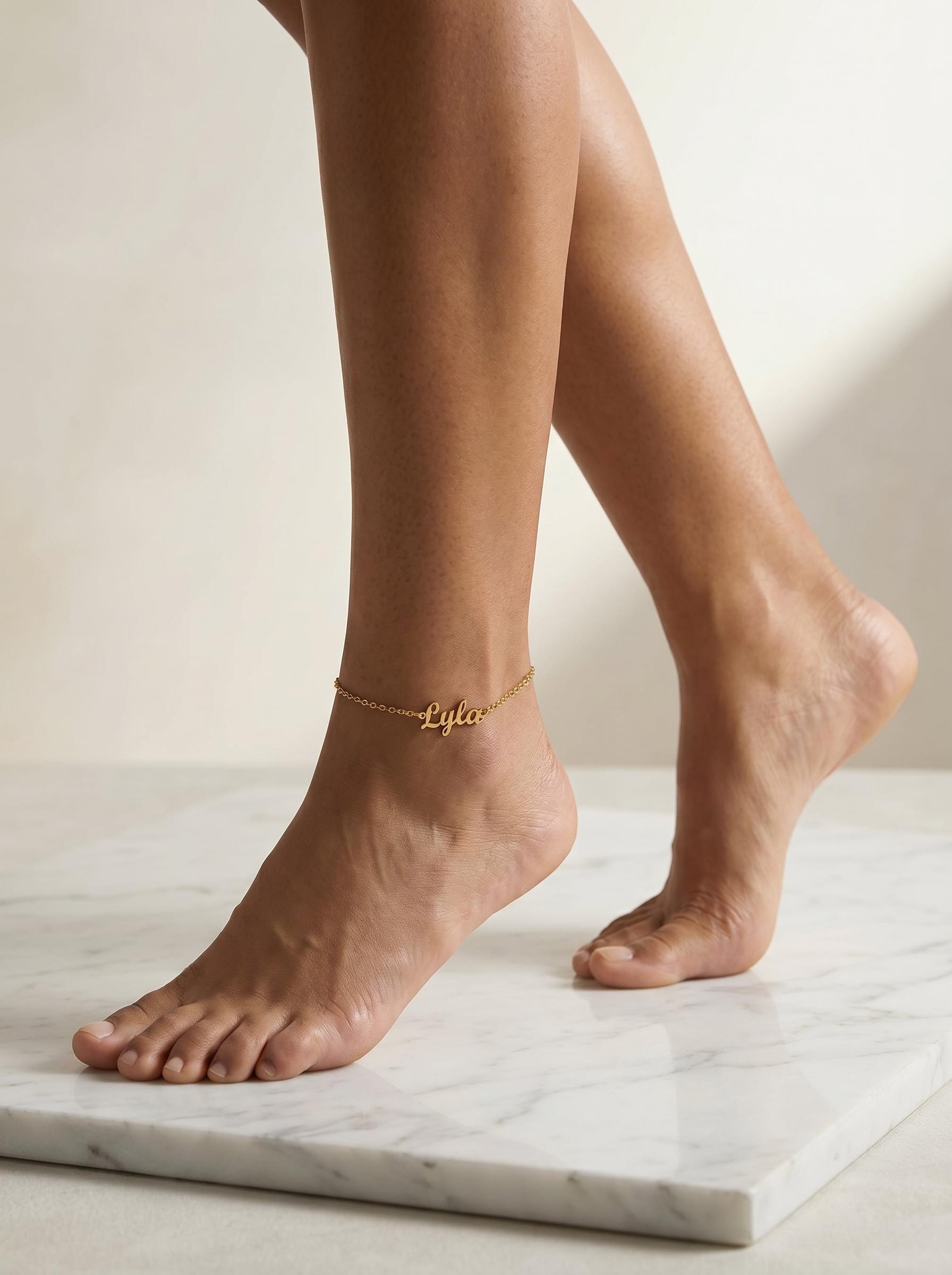
Well-maintained feet and a thoughtfully chosen anklet create an image with more aesthetic layers than either alone. A custom name anklet — gold, personalised, worn consistently — becomes the signature detail that makes foot photography distinctly yours.
Shop Name Anklets →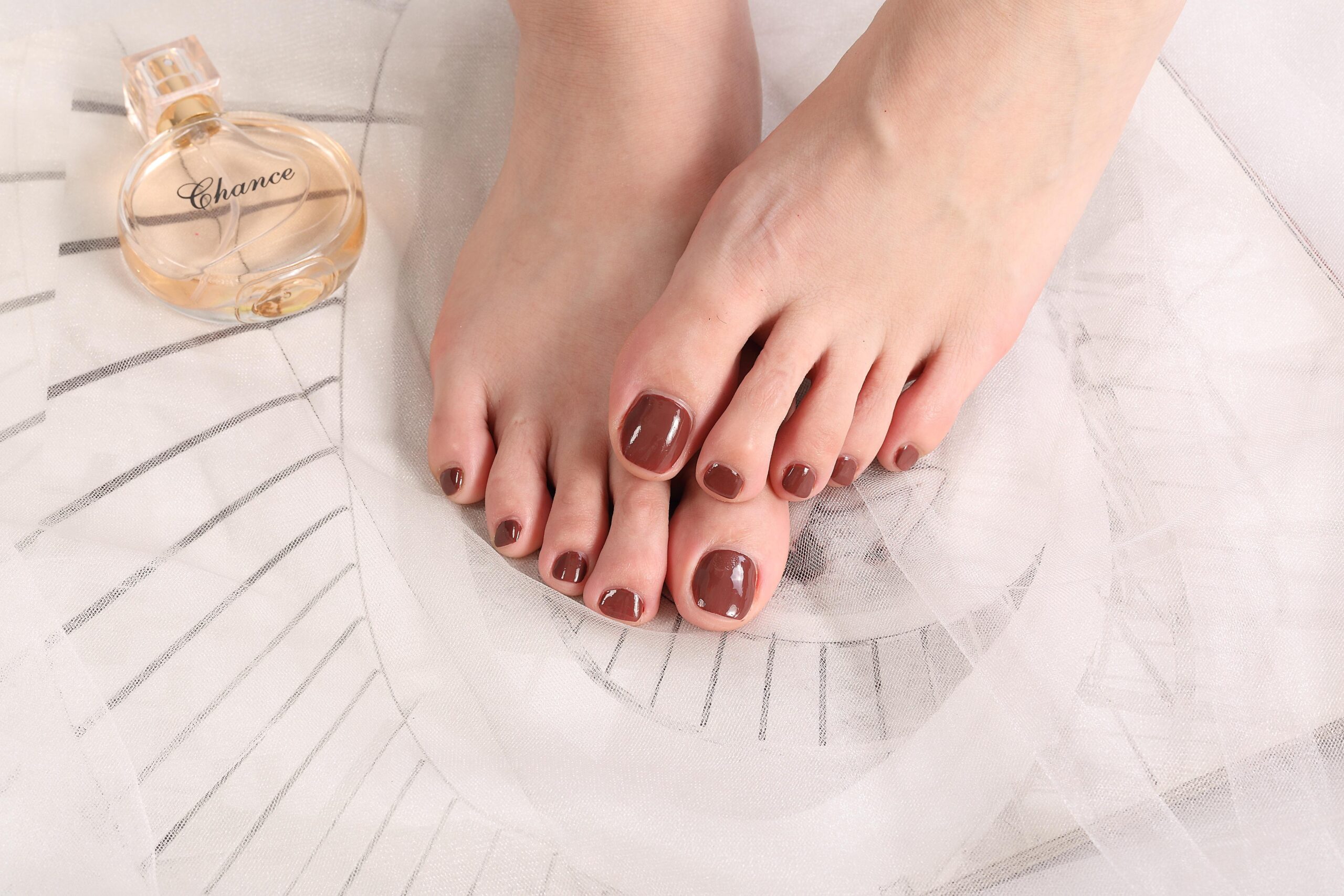
How Social Media Changed the Conversation
The shift in how foot content is perceived over the past decade has less to do with any change in human psychology than with a change in what is visible. Social media made foot content — from casual beach photos to deliberate foot photography — a normal part of the visual landscape in a way that simply wasn’t possible before.
Hashtags like #FootSelfie and #ToeTuesday normalised the sharing of foot images in a light, casual context, which lowered the social threshold for engagement. Influencers in the fashion and beauty space incorporated foot content naturally — pedicure showcases, shoe reviews, barefoot lifestyle imagery — which further reduced any stigma around showing or appreciating feet. What began as a niche interest became visible enough to reveal that the interest was never as niche as assumed.
The result is a more honest cultural picture: foot appreciation is common, has historical and neurological underpinnings, and is expressed across a wide spectrum from casual aesthetic interest to more specific personal preference. The internet didn’t create this — it made it visible enough to discuss.
Feet as a Subject of Creative Expression
For a growing number of photographers and content creators, feet are not primarily a fetish subject — they’re a subject of aesthetic photography that happens to have a dedicated and commercially active audience. The genre shares more with portrait photography than most discussions acknowledge: it involves decisions about lighting, composition, skin preparation, angle, and styling that are identical to the decisions involved in any kind of close-up human photography.
The range of styles within foot photography reflects the breadth of the audience: minimalist clean-skin images for buyers who value simplicity; oiled or textured content for those who want visual richness; nail art showcases for the pedicure-adjacent audience; anklet and jewellery styling for the fashion-forward end. Each of these represents a distinct aesthetic position that attracts different buyers and calls for different creative decisions.
The overlap with the commercial side — creators who produce foot content as an income stream — has further professionalised the genre. The standard of lighting, skin preparation, and image quality in high-performing foot content today is significantly higher than a decade ago, which reflects both increased competition and increased expectation from buyers who have become aesthetically discerning.
Addressing Common Misconceptions
- “It’s just a fetish” — an oversimplification
The word “fetish” is technically accurate in a clinical sense for a specific subset of foot appreciation — sexual interest in feet as a primary or necessary stimulus. But it doesn’t describe the full population of people who appreciate feet aesthetically, who buy foot content, or who follow foot photography accounts. Most engagement with foot content is better described as aesthetic appreciation than clinical fetishism, in the same way that most engagement with portrait photography isn’t clinical narcissism.
- “It’s taboo or shameful” — historically inaccurate
As the historical section above demonstrates, interest in feet has not been taboo across most of human history. The association of foot attraction with shame is largely a product of 20th-century popular culture rather than any deep-seated cultural consensus. In contemporary culture, the normalisation driven by social media and dedicated content communities has largely dissolved this stigma for most audiences.
- “Everyone who buys foot content has the same motivation” — untrue
The buyer population for foot content is as varied as any other content category. Some buyers are primarily motivated by specific aesthetic preferences. Some are collectors of a particular style or creator. Some are driven by the fetish dimension in a technical sense. Some simply appreciate the photography as a craft. Treating this as a monolithic group with a single motivation misrepresents a diverse and nuanced audience.
- “Creating foot content is embarrassing” — a personal decision that has been widely normalised
Foot content creation is a recognised form of online content production with an active professional community. Creators who approach it professionally — with quality photography, consistent posting, and proper platform selection — operate in a legitimate market with real earning potential. The stigma that existed a decade ago has diminished significantly as the category has become more visible and more mainstream.
How to Engage Respectfully as a Buyer
For those who engage with foot content as buyers, the norms of respectful interaction are the same as in any professional content marketplace:
- ✦Use verified platforms. Platforms that verify both buyers and sellers create a professional environment where transactions are secure and both parties are protected. Verified platforms also reduce the risk of scams significantly — a concern that affects buyers as well as sellers. Always use platforms with proper verification infrastructure rather than engaging through informal channels.
- ✦Communicate professionally and respectfully. Creators are running a business. Approach enquiries the way you would any professional service request: clearly state what you’re looking for, ask about availability and pricing directly, and treat the response you receive with the same professionalism you’d expect in return. There’s nothing unusual about requesting foot content — what matters is how you ask.
- ✦Accept a creator’s boundaries without negotiation. Every creator has content they produce and content they don’t. A boundary stated by a creator is not an opening position in a negotiation — it’s a professional policy. Respecting it immediately, without pushback or pressure, is the baseline expectation in this market and the foundation of the kind of buyer reputation that gets good service.
- ✦Explore your preferences openly. The range of styles, aesthetics, and content types within foot photography is broad. Take time to identify what specifically appeals to you — particular angles, aesthetics, nail styles, skin tones, jewellery — so you can communicate your preferences clearly when requesting custom content. Specific, well-articulated requests produce better results and better buyer experiences than vague or exploratory ones.
- ✦Keep all transactions within the platform. Requests to move payment or communication outside a verified platform are a scam risk, regardless of how they’re framed. All financial transactions should remain on the platform where both parties are verified and protected. This isn’t a restriction on your experience — it’s what makes the experience reliable.