Dry, Cracked Heels —
What Actually Works
The fix for cracked heels is a two-ingredient system: urea cream to break down the thickened outer layer, and an overnight occlusion treatment to drive moisture in while you sleep. Standard body lotion on its own rarely works because it can’t penetrate calloused skin. Most cases improve within 7 to 10 days. Severe cracking that bleeds or doesn’t improve warrants a podiatrist visit.
Cracked heels are one of the most common foot complaints, and also one of the most commonly mistreated. The default approach — apply more lotion — addresses the symptom without the cause. Calloused heel skin is structurally different from normal skin. It doesn’t absorb standard moisturiser efficiently, which is why the condition persists even in people who moisturise regularly.
This guide identifies the type of cracking you’re dealing with, explains what actually works and why, lists the remedies that are overrated, and provides a seven-day repair protocol. The distinction between types matters: the right treatment for dry skin cracking is not the same as the right treatment for friction-driven callous build-up.
First: Which Type of Cracked Heels Do You Have?
Most advice treats all cracked heels identically. The reality is that different causes respond to different treatments. Identify your type before choosing a protocol:
The most common type. Insufficient moisture in the skin leads to loss of elasticity, and the skin cracks when stretched under body weight.
Signs: Shallow cracks, rough texture, skin feels tight, worsens in winter or dry environments. Usually not painful unless cracks deepen.
Excess keratin builds up over time under pressure points. The hardened tissue eventually cracks under mechanical stress rather than from dryness alone.
Signs: Thick, yellowed skin around the heel rim, cracks appear within the hard skin rather than at its edge, often less painful than it looks.
Open-backed shoes and sandals allow the fat pad under the heel to spread laterally under load, causing the skin to crack at the outer edges.
Signs: Cracking mainly on the outer rim of the heel, worsens in summer with sandal use, often affects otherwise healthy skin that isn’t generally dry.
Conditions including eczema, psoriasis, thyroid disorders, and diabetes can all manifest as persistent heel cracking that doesn’t respond to standard treatment.
Signs: Cracking that doesn’t improve with consistent moisture treatment, accompanied by scaling, redness, or itching elsewhere on the body.
What Actually Works
These methods have clear mechanisms of action — they work because of what they contain or do, not because of tradition or anecdote.
Urea is a keratolytic — it breaks down the protein bonds holding hardened dead skin cells together, allowing them to shed and enabling moisture to reach the living skin underneath. This is the single most effective over-the-counter treatment for dry, calloused heels.
How to use: Apply 25–40% urea cream to dry heels twice daily. Higher concentrations work faster on severe callouses; 10–15% is appropriate for mild dryness. Results are usually visible within 3 to 5 days of consistent use.
Skin loses moisture overnight through a process called transepidermal water loss. Petroleum jelly is one of the most effective occlusives available — its large molecular structure prevents it from absorbing into the skin, instead forming a seal that keeps moisture in for the full sleep cycle.
How to use: Apply urea cream first, then apply a generous layer of petroleum jelly over the top. Put on clean cotton socks and sleep in them. The combination treats and seals simultaneously. Do this nightly for the first week of your repair programme.
Soaking in warm water temporarily softens the outer skin layer and opens the pathways for topical ingredients to penetrate more deeply. The critical detail is timing: moisturiser applied within 60 seconds of patting skin dry absorbs far more effectively than moisturiser applied to fully dry skin.
How to use: Soak for 10–15 minutes in warm (not hot) water. Pat partially dry — leave the skin slightly damp. Apply urea cream immediately. The damp surface acts as a carrier that draws the cream into the skin more efficiently than dry application.
Salicylic acid is a beta hydroxy acid that dissolves the intercellular cement holding dead skin cells together. It works differently to urea — where urea softens the cells themselves, salicylic acid targets the bonds between them. For very thick callouses, combining both addresses the problem from two angles.
How to use: Apply a 2–4% salicylic acid foot product to the thickened area only, not to healthy surrounding skin. Leave for the directed time and rinse off. Follow with moisturiser. Use 2–3 times per week rather than daily.
Manual exfoliation removes the softened dead skin that treatments have loosened — it doesn’t treat the underlying cause itself. Used in combination with urea and occlusion, it accelerates results by clearing the material that has been broken down. Used alone on dry heels without moisture treatment, it provides temporary smoothness followed by rapid regrowth.
How to use: Soak first, then use a pumice stone or foot file with gentle circular pressure on wet skin. Once per week during active treatment; once every two weeks for maintenance. More frequent exfoliation triggers a thickening response.

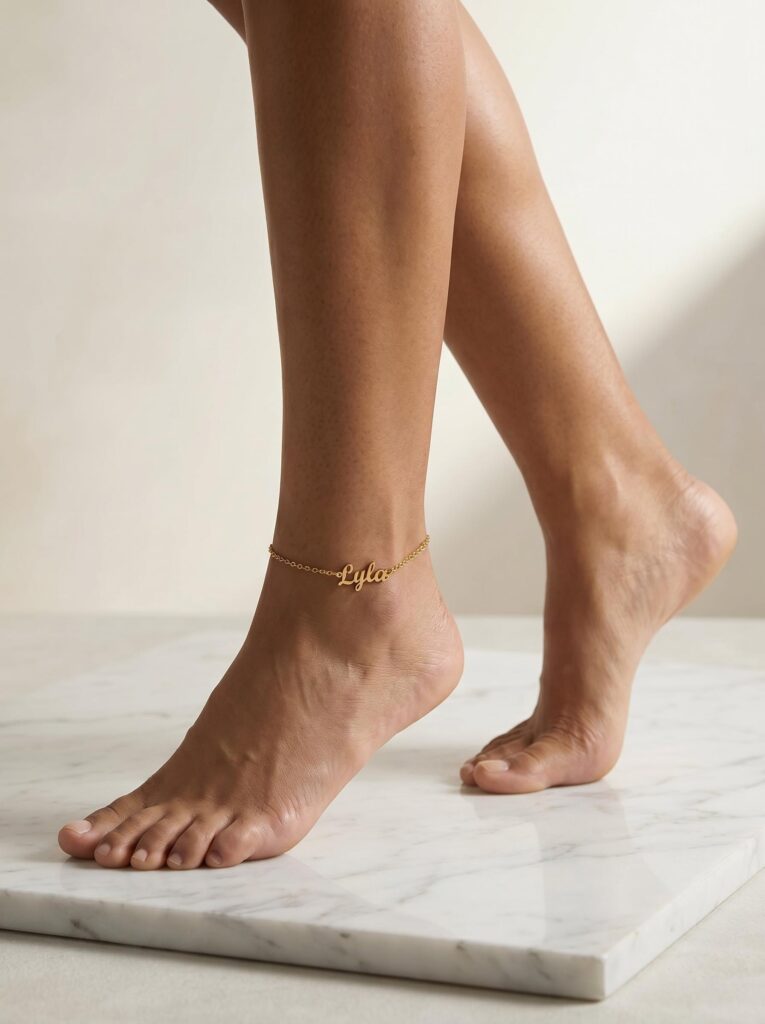
Once your heels are smooth and healthy, a simple piece of jewellery just above them becomes the finishing touch rather than a distraction. A custom name anklet — delicate, gold-toned, sitting exactly where the care shows most.
Shop Name Anklets →What Doesn’t Work (or Is Overrated)
These remedies are widely recommended but either don’t work for the reasons claimed or are significantly less effective than they appear:
Body lotion is designed for the skin on your arms and legs — it’s not formulated to penetrate calloused heel tissue. Without a keratolytic ingredient (urea or salicylic acid), it sits on the surface and evaporates. This is why people who moisturise daily still have rough heels — the product isn’t reaching the problem.
Coconut oil is a light emollient — it can help maintain softness in already-healthy skin but lacks the keratolytic properties needed to break down hardened heel tissue. It works as a light finishing layer or added to a soak, but not as a treatment for cracking. The scientific evidence for coconut oil as a heel treatment is weak compared to urea-based products.
Aggressive mechanical removal of heel skin faster than the skin regenerates triggers a protective thickening response. The body interprets repeated abrasion as mechanical threat and produces more keratin — the opposite of the intended effect. Weekly gentle exfoliation is sufficient; daily or vigorous grinding worsens the underlying problem over time.
Both are mildly acidic and can temporarily soften the outermost surface layer. However, the concentration is too low to achieve meaningful keratolytic effect, and repeated exposure to acidic soaks can damage healthy skin and disrupt the skin’s natural pH balance. They’re not harmful in occasional use but are not an effective treatment.
Cracks are the symptom. The cause is the hard, dry skin around the entire heel area — when that skin loses flexibility and bears weight, it splits. Treating the crack itself while leaving the surrounding callous untreated means the crack will return as soon as the local treatment wears off.
The 7-Day Repair Protocol
This sequence is designed for mild to moderate cracking. Follow it in order — each day’s action builds on the previous one:
- 1DaySoak and first application
Soak for 15 minutes in warm water. Pat partially dry. Apply high-concentration urea cream (25–40%) to heels and the surrounding hard skin. Evening: petroleum jelly over the top, cotton socks overnight.
- 2DayMorning application and assessment
Remove socks. Rinse with cool water. The skin should feel noticeably different — softer, slightly tacky. Apply urea cream again in the morning. Evening: repeat petroleum jelly and sock treatment.
- 3DayFirst light exfoliation
Soak for 10 minutes. Gently exfoliate with a pumice stone — the urea from Days 1 and 2 has softened what was hardened. You should see visible removal with minimal pressure. Pat dry, apply urea cream, repeat overnight treatment.
- 4DayMaintenance and rest
No soak, no exfoliation. Apply urea cream morning and evening. The skin needs time to regenerate without further mechanical disruption. Wear comfortable, closed-toe shoes during the day to reduce friction.
- 5DayTargeted crack treatment
Apply urea cream specifically inside and around any remaining cracks. Cover with a hydrocolloid bandage overnight rather than just socks — hydrocolloid creates a moist healing environment that accelerates skin repair in open fissures.
- 6DaySecond light exfoliation
Soak briefly, exfoliate again with gentle pressure. By Day 6, significantly less material should be removable — this is a positive sign that the outer layer is thinning appropriately. Apply urea cream and repeat overnight occlusion.
- 7DayAssessment and transition to maintenance
Assess the result in good light. Mild cracking should be resolved. Moderate cracking should be significantly improved with remaining surface irregularities smoothed. Transition to once-weekly exfoliation and nightly urea cream as a maintenance habit.
- Cracks that bleed, ooze, or show signs of infection (redness spreading from the crack, warmth, swelling)
- Heels that don’t improve after 3 to 4 weeks of consistent treatment with urea-based products
- Cracking accompanied by itching, scaling, or redness elsewhere on the foot (may indicate eczema, psoriasis, or fungal infection)
- Severe, deep fissures where self-treatment risks opening the skin further
- Any heel condition in a person with diabetes or poor circulation — foot skin integrity requires closer monitoring in these cases
Ongoing Prevention: Stopping It Coming Back
- ✦Moisturise every evening, not just when heels look dry. Skin loses moisture overnight regardless of how it looks. Evening application before bed is more effective than morning application because skin repair is most active during sleep.
- ✦Wear shoes with adequate heel support. Open-backed sandals and flip-flops allow the heel fat pad to spread laterally with each step, creating the lateral pressure that drives the most common type of cracking. Use them occasionally, not daily, if you’re prone to heel issues.
- ✦Exfoliate once a week, consistently. The key word is consistently. Weekly maintenance prevents the build-up that eventually leads to cracking. It’s significantly easier than repairing severe cracking once it develops.
- ✦Hydrate adequately. Skin hydration is partly dependent on internal water intake. Chronically dehydrated skin is more prone to cracking than well-hydrated skin, regardless of what you apply topically.
- ✦Do a full pedicure once a month to reset and assess. Our complete guide — how to do a spa pedicure at home — covers the full routine including the heel treatment step.