Style Guide · 2026
Can I Wear Silver and Gold Together?
Yes — and Here’s Exactly How
The answer is yes — and in 2026, the more interesting question is how to mix silver and gold jewelry so it looks intentional rather than accidental. The old rule that said you had to pick one metal and stick with it has been quietly retired by everyone who actually dresses well. The most considered jewelry looks right now combine warm-toned and cool-toned pieces deliberately, using the contrast between them to create depth that a single-metal look rarely achieves. The key is knowing the principles behind it — and having at least one piece that anchors the mix. A personalized name anklet or bracelet works particularly well as that anchor piece, because the meaning it carries makes the metal tone secondary to the reason you’re wearing it.
This guide covers three core principles for mixing gold and silver jewelry, then breaks down how to apply them at each body position — neck, wrist, and ankle — with specific formulas for each. Whether you’re building a full mixed-metal look or just adding a warm-toned piece to a mostly cool-toned collection, the same logic applies throughout.
First: Why the Old Rule No Longer AppliesThe Rule That Said
“Pick One” Was Always Wrong
The “never mix metals” rule came from an era when jewelry was bought in sets — a matching necklace, earrings, bracelet, and ring, all in the same metal, purchased together and worn together. In that context, mixing metals would have meant combining two incomplete sets, which genuinely would have looked odd. But almost nobody builds their jewelry collection that way anymore. Pieces are accumulated gradually, chosen for their individual meaning or aesthetic rather than their relationship to a matching set. The result is that most people already own pieces in different metal tones — and the question isn’t whether to mix them, but how.
“Mixing silver and gold stops looking accidental the moment it becomes deliberate. One metal warms the look. The other sharpens it. Together they create a contrast that a single-metal stack almost never achieves.”
The other reason the rule has faded is that personalized jewelry has changed how people relate to what they wear. A name engraved on a warm-toned chain carries meaning that makes the metal tone feel beside the point — you’re not wearing it because it matches your earrings, you’re wearing it because it carries something specific. That shift from coordination to meaning is exactly what makes mixed metals feel more current than matching sets. The intentionality comes from the piece itself, not from color-matching.
Three Principles That Make It WorkHow to Mix Silver and Gold —
The Rules That Actually Apply in 2026
A mixed-metal look works best when one tone leads and the other accents. Roughly 60–70% of the visible jewelry should be one metal, with the remaining 30–40% in the other. This prevents the look from feeling split down the middle, which can read as indecision rather than style. The dominant tone should be whichever metal suits your skin tone better or anchors the most meaningful piece you’re wearing — the other metal provides contrast and interest without taking over.
The most convincing mixed-metal looks have both tones appearing more than once. If warm-toned pieces only appear at the ankle and cool-toned pieces only appear at the neck, the look reads as two separate things rather than one mixed-metal outfit. Repeating both metals at different body positions — a warm chain at the neck and wrist, a cool-toned ring and anklet — creates visual cohesion. The eye reads it as intentional rather than coincidental.
Mixing metals is easiest when all the pieces share a similar visual weight and aesthetic sensibility. Delicate fine chains in different tones mix easily — the similarity in scale makes the difference in tone feel deliberate. Mixing a chunky silver statement cuff with a very fine warm-toned chain can feel mismatched, not because the metals clash but because the pieces are operating in different visual registers. If everything is dainty or everything is bold, the tonal difference stops being a problem.
Gold and Silver Together —
How It Works at Every Level
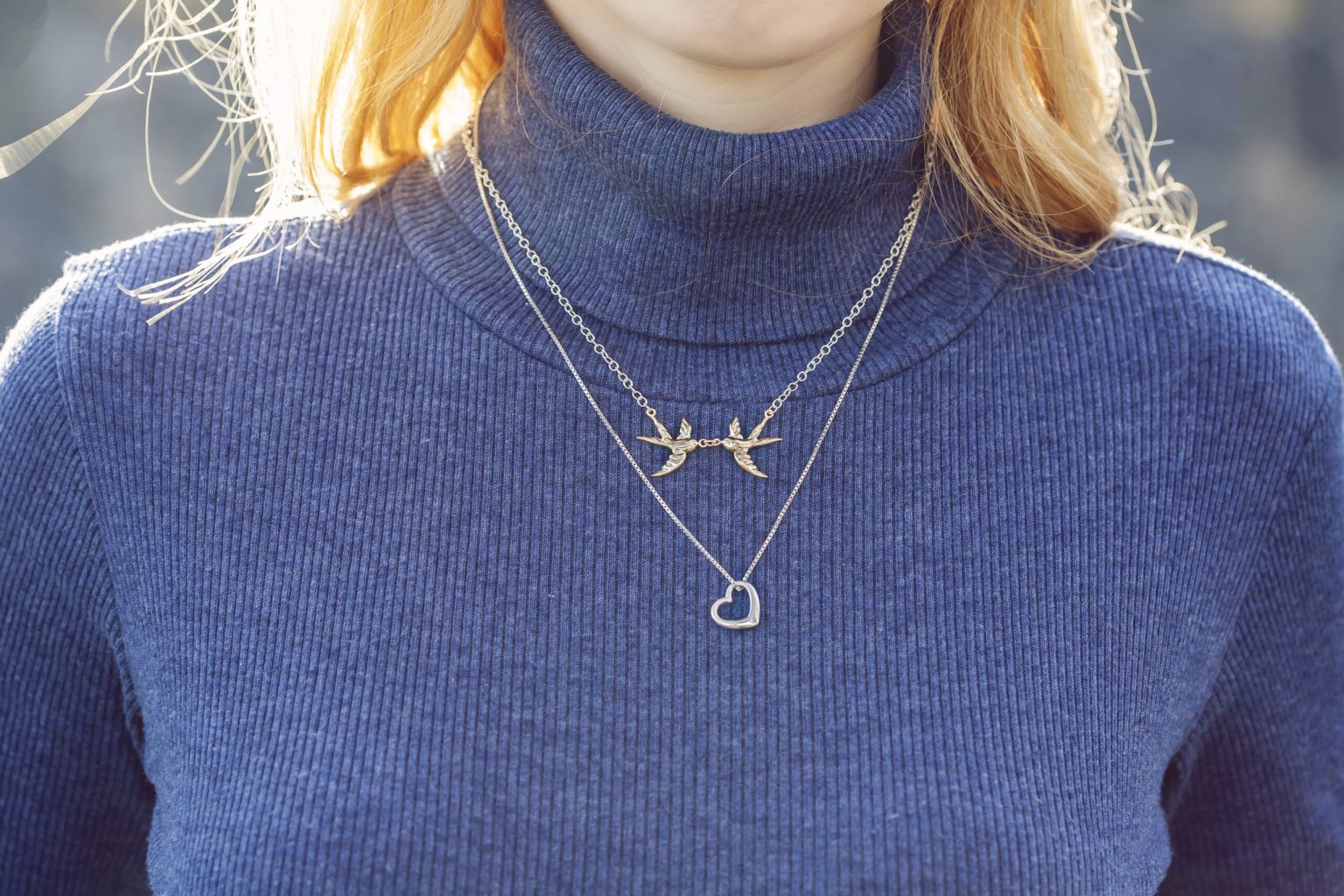
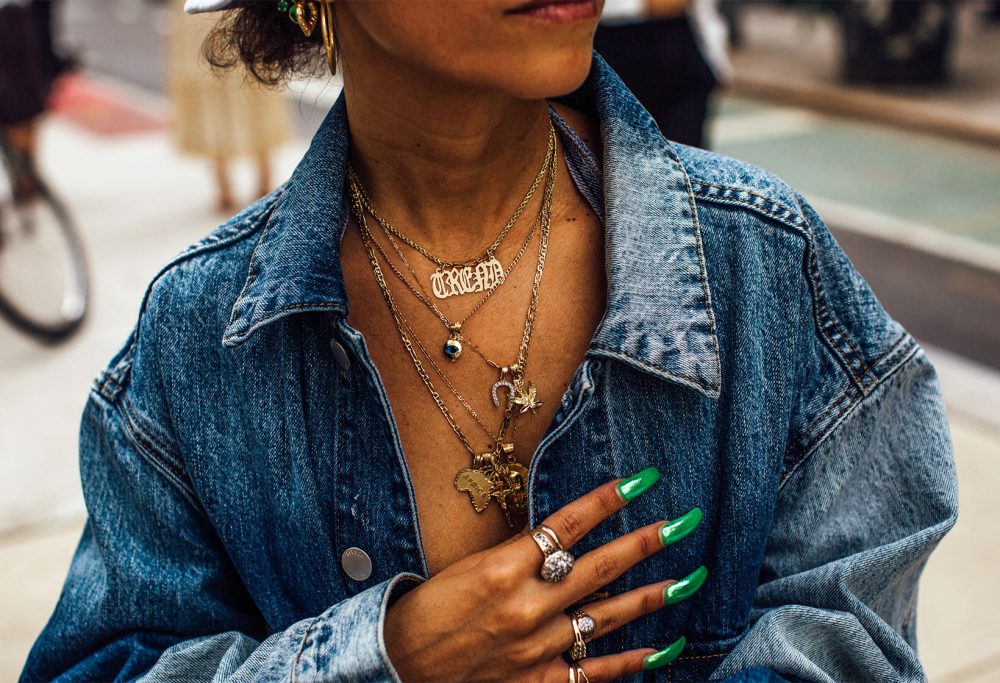
Necklace layering is where mixed metals are most visible and most impactful. The most common formula is two or three necklaces at different lengths — 16″, 18″, and 20″ — in alternating tones. A warm-toned name necklace at the collarbone (16″) pairs naturally with a slightly longer cool-toned fine chain at 18″, and possibly a third pendant at 20″ in either tone. The name piece anchors the stack with meaning; the plain chain in a contrasting tone provides visual variety without competing.
The key with necklace mixing is spacing — each chain needs to be clearly visible as a separate layer. If the lengths are too similar (within 1–2 inches of each other), the chains tangle and the individual pieces lose definition. Give each layer room to sit cleanly. A warm-toned name necklace at 16″ and a cool-toned plain chain at 19″–20″ creates exactly the right amount of separation.
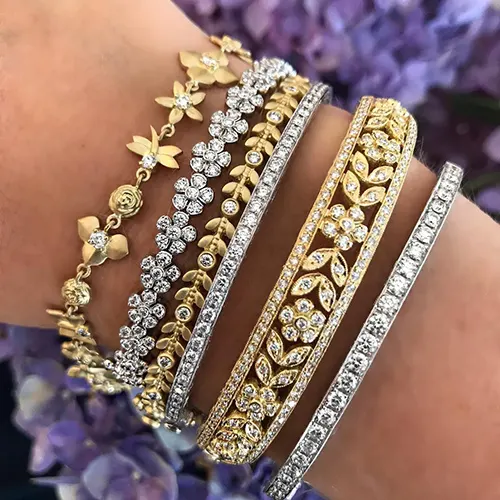
The wrist is the most forgiving body position for mixing metals because it’s small enough that the contrast between tones reads as detail rather than conflict. Stacking two or three bracelets in mixed tones — a warm-toned name bracelet alongside a cool-toned fine chain, or a textured cool-toned cuff with a slim warm-toned engraved piece — creates exactly the kind of curated wrist stack that has become one of the most popular jewelry looks of 2026.
One note on wrists: if you wear a watch, the watch already has a metal tone that should be considered part of the mix. A warm-toned watch with a cool-toned bracelet stack works on the opposite wrist — or keep everything on the watch side and let the watch act as the dominant warm tone, with mixed bracelets as accents. A cool-toned watch on the left wrist pairs naturally with a warm-toned name bracelet on the right.
The ankle is the easiest body position to experiment with mixed metals because it’s the furthest from eye level. A mixed-metal choice at the ankle is visible to you and to people in immediate proximity — it doesn’t dominate the look the way a necklace combination does. This makes it a natural starting point if you’re new to mixing metals: wear what you already own at the ankle in one tone, then add a personalized warm-toned piece like a name anklet or date anklet alongside it, and see how the combination sits.
Ankle jewelry is also where the “meaning over metal” principle applies most clearly. A personalized name or date anklet is worn because it carries something specific — the metal tone becomes almost irrelevant because the piece justifies itself through its content rather than its color coordination. It’s the anchor piece that makes the rest of the mix feel earned rather than casual.
Rings are where most people first encountered mixed metals, usually through combining a warm-toned engagement ring with a cool-toned wedding band, or stacking rings from different points in their life. The principle that works here is the same as everywhere else: keep the weight and style similar across tones, and let one metal lead. Delicate stacking rings in mixed tones are the easiest entry point — the fine scale makes the tonal difference feel like a detail rather than a conflict.
For a cohesive mixed-metal ring look that connects to the rest of the outfit, mirror whatever tone dominates at the neck and wrist. If the necklace and bracelet are primarily warm-toned with cool-toned accents, let the same ratio guide the ring stack. The overall look reads as considered when the same tonal relationship repeats at different body levels.
How to Balance the Mix
Silver and Gold Together —
What Works and What Doesn’t
| ✅ What Works | ⚠️ What to Avoid |
|---|---|
| One dominant tone with accents in the other (60/40) | Perfectly equal split with no clear lead tone |
| Both metals repeating at multiple body levels | One metal only at the neck, the other only at the wrist |
| Consistent visual weight across different tones | Chunky one tone, delicate the other |
| A personalized anchor piece in one tone that justifies itself through meaning | All generic pieces — no clear reason for any specific choice |
| Necklace layers at clearly different lengths (3″+ apart) | Mixed-tone necklaces at similar lengths that tangle |
| Watch tone factored into overall wrist balance | Ignoring the watch as a metal element in the mix |
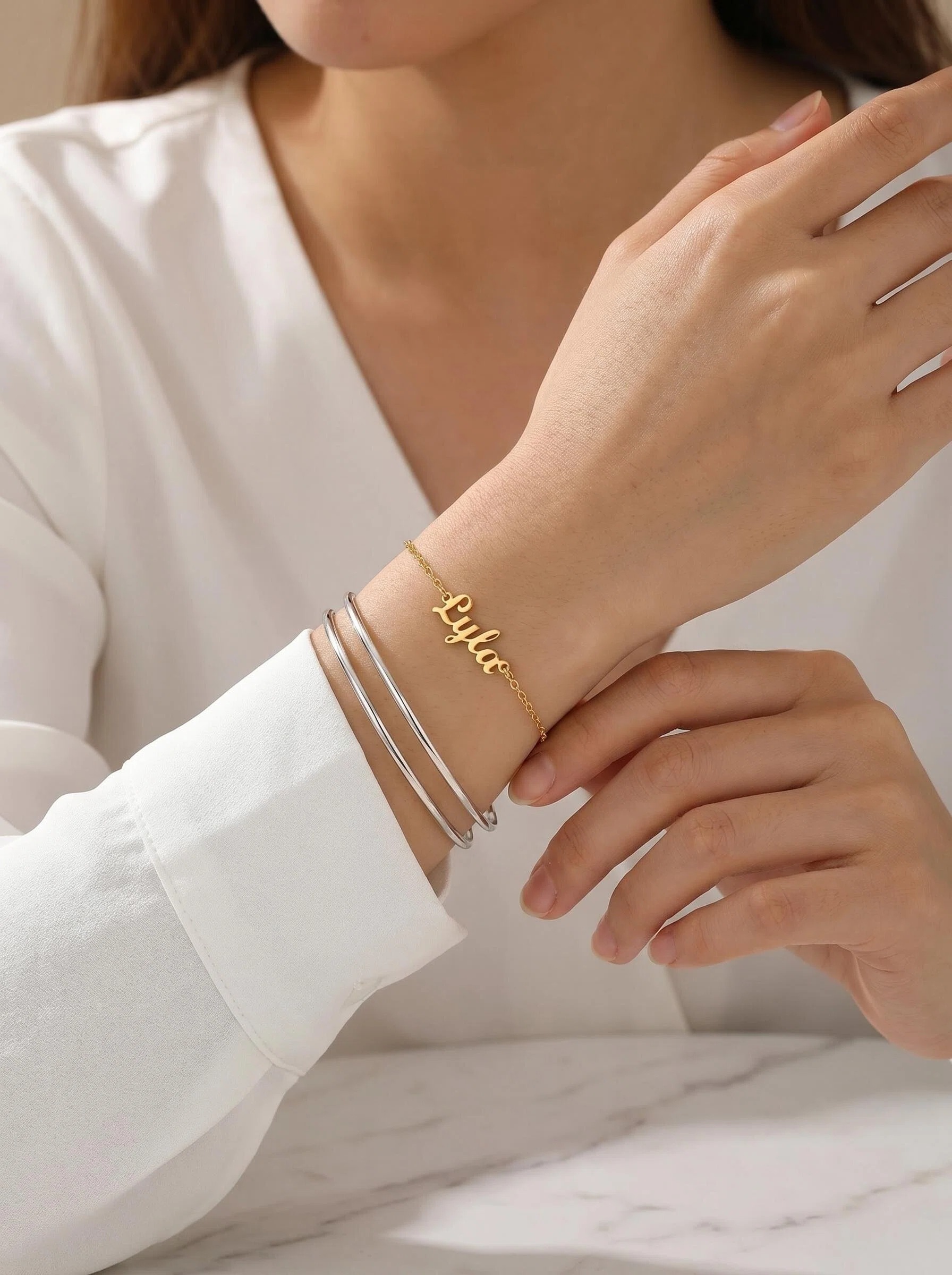
The reason personalized jewelry — a name anklet, a name bracelet, a name necklace — works so well in a mixed-metal look is that it removes the “why are you wearing that specific piece” question entirely. You’re wearing it because it carries your name, your date, or someone else’s name. The metal tone becomes secondary to that explanation, which means you can confidently pair it with pieces in a contrasting tone without the combination feeling random.
A warm-toned name anklet worn with cool-toned stacked rings isn’t a coordination accident — it’s a deliberate choice to keep a piece that means something regardless of what it matches. That confidence in the individual piece is what makes the overall look feel curated rather than careless. The full range of eco-friendly, hypoallergenic, tarnish-free personalized jewelry styles is available in warm tones that pair naturally with existing cool-toned collections.
The Answer to
“Can I Wear Silver and Gold Together?”
Yes — always yes, provided you apply the three principles that make it work: one dominant tone, both metals repeating across body levels, and consistent visual weight throughout. The specific ratio matters less than the intentionality behind it. A 60/40 split where one metal clearly leads looks more considered than a precisely equal split that reads as indecision.
The most reliable way to make mixed metals look deliberate is to have at least one piece with a reason to be there beyond aesthetics. A personalized name or date piece in a warm tone anchors the whole look with meaning — which is a more convincing explanation for any tonal combination than coordination ever manages to be. Mix the metals. Wear what you love. The look takes care of itself.
Mix Your Metals with
Something That Means Something
Eco-friendly, hypoallergenic, tarnish-free personalized jewelry — name anklets, bracelets, and necklaces in warm tones that anchor any mixed-metal look. Free engraving on every piece.
✦ Free engraving · Waterproof construction · See the full collection