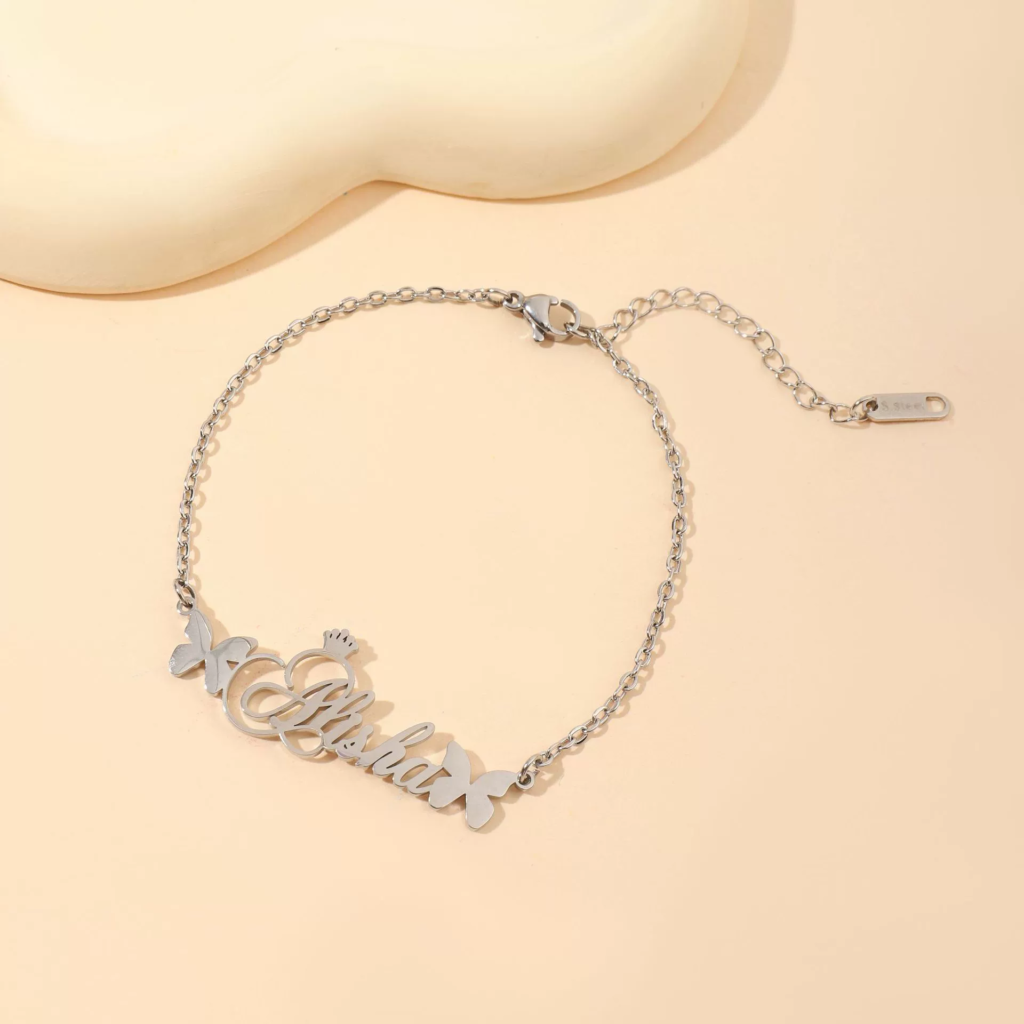
There’s a version of a beach day that most people never quite pull off — the one where your feet look as considered as the rest of you. Toenails done, anklet catching the light, the whole thing effortless and intentional at the same time. Foot jewelry beach styling is one of those details that makes an outfit feel finished without trying too hard, and the good news is that it’s far simpler to get right than most people assume. The custom anklets at CustomAnklets.com are built specifically for this — waterproof, eco-friendly, and designed to stay on your ankle from the first morning on the sand to the last evening out.
Why the Beach Is the Best Place to Wear Foot Jewelry
Most accessories don’t survive a beach day. Leather bags show salt marks, fabric hats go limp, and standard jewelry tarnishes the moment it meets seawater. Foot jewelry is different — when it’s made from the right materials, a beach environment is exactly where it thrives.
The combination of bare feet, open sandals, and exposed ankles means your foot jewelry is more visible at the beach than anywhere else. You’re not fighting against jeans or closed shoes. The natural setting — sand, light, movement — frames the piece in a way no indoor environment quite matches. A delicate anklet that goes unnoticed in a city office becomes genuinely striking on a beach, catching the sun with every step.
The condition, as always, is that the piece is actually built for it. A personalized anklet that’s waterproof and made from hypoallergenic, tarnish-free materials doesn’t just survive the beach — it looks better for having been there.
What Types of Foot Jewelry Work Best at the Beach
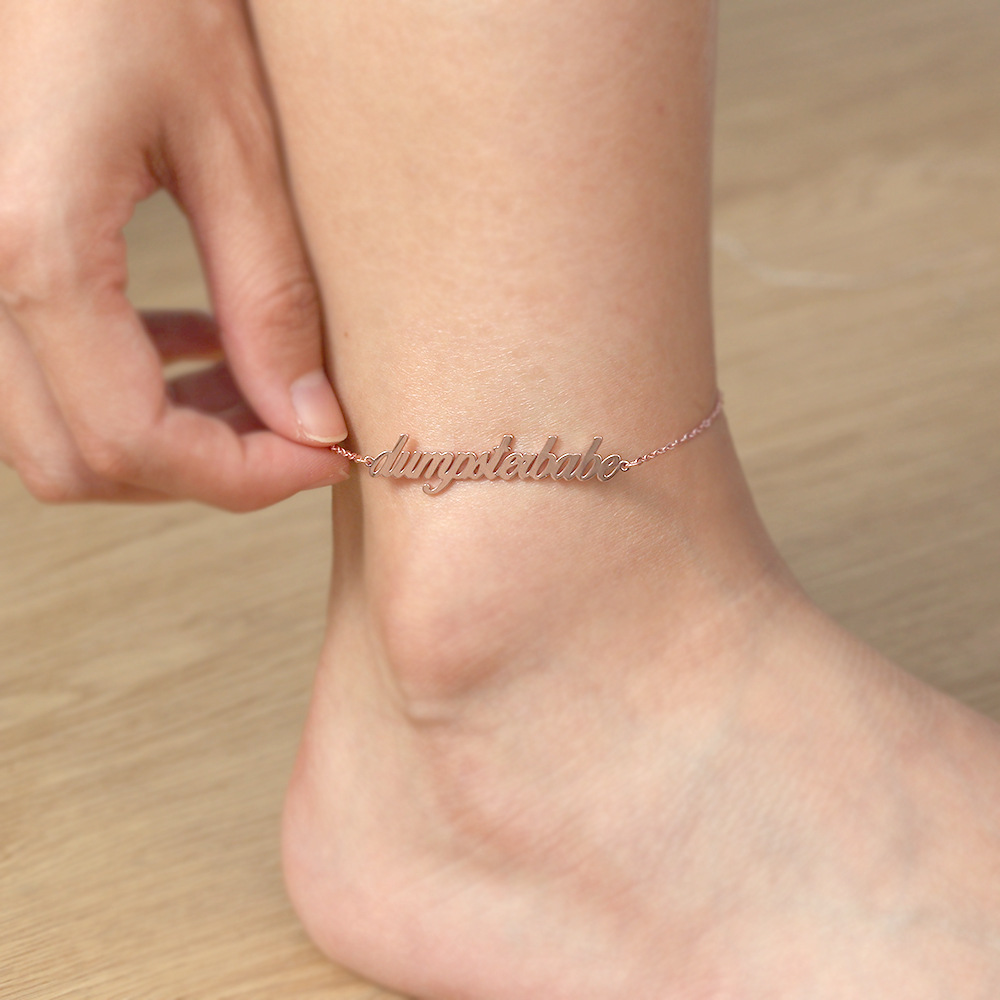
Anklets are the clear winner for beach environments. They sit above the waterline when you’re paddling, they’re visible with both bare feet and sandals, and they don’t interfere with walking on sand. A slim chain anklet — particularly a custom name anklet — is the most versatile option: subtle enough for a quiet morning walk, noticeable enough for an evening cocktail by the pool.
Layered or stacked anklets work especially well at the beach because the setting gives them space to breathe. Two or three fine chains worn together create a collected, intentional look without reading as overdone. The key is keeping the pieces similar in weight and finish — mixing very delicate chains with chunky ones tends to look accidental rather than styled.
Barefoot sandals — the style that connects an anklet to a toe ring across the top of the foot — are at their absolute best in a beach context. They’re too statement-forward for most everyday situations, but on white sand in a sundress, they’re exactly right. If there’s one occasion that calls for barefoot sandals, it’s a beach wedding or a resort evening.
Toe rings on their own work well at the beach too, particularly if you’re going barefoot rather than in sandals. A simple adjustable ring on the second toe catches sand and light in equal measure and requires no maintenance beyond putting it on.
The Materials Question: What Actually Survives the Beach
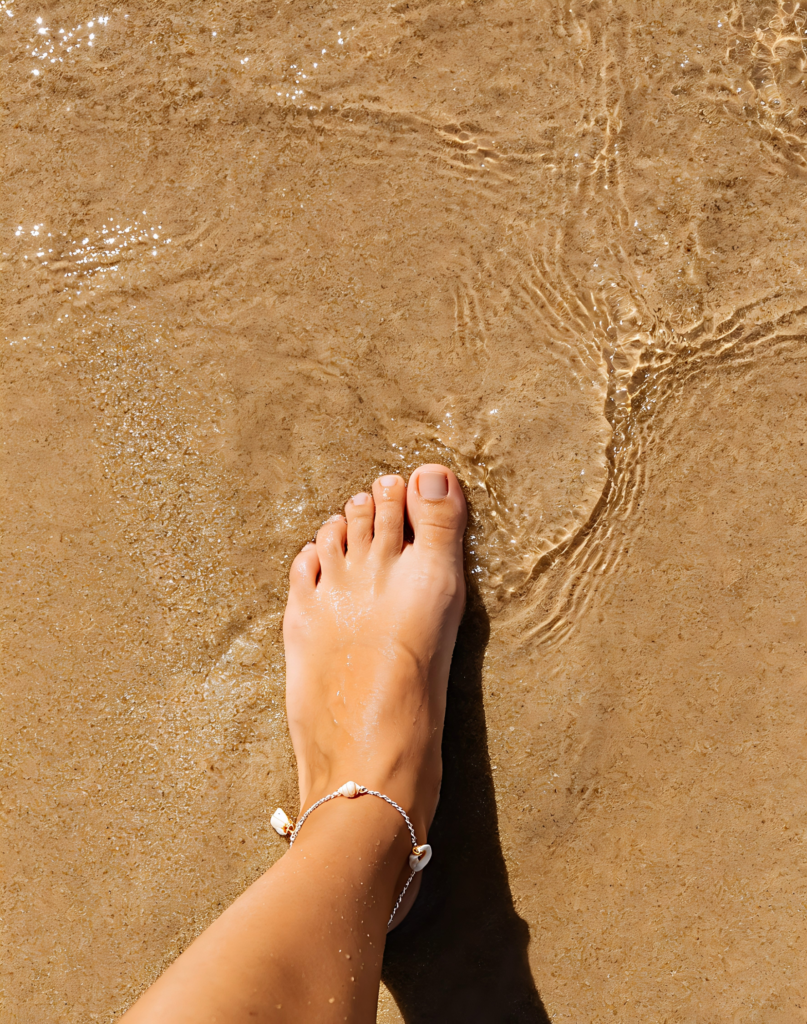
This is where most people make a mistake. Standard plated jewelry — even pieces that look beautiful in a store — deteriorates quickly when exposed to saltwater, sun cream, and repeated wetting and drying. The finish lifts, the base metal reacts with skin, and within a few beach days the piece looks years older than it is.
For beach foot jewelry, you need materials that are genuinely waterproof and tarnish-resistant — not just water-resistant in passing rain, but built to withstand sustained saltwater exposure. Look for pieces described as using eco-friendly, hypoallergenic finishes that won’t react with skin or seawater. The best options are also fade-resistant, meaning the color and finish hold even after repeated sun and water exposure.
The practical result is that you can put the anklet on before you leave for the beach and take it off when you get home — or not at all. No anxious removal before swimming. No drying it carefully before it marks your skin. Just wear it, forget about it, and let it do its job.
How to Style Foot Jewelry at the Beach
Keep it proportional to the outfit. A barely-there bikini calls for delicate chains and minimal pieces. A flowing maxi dress or beach coverup can carry something bolder — a chunkier chain anklet or a layered stack. The jewelry should feel like it belongs to the same aesthetic register as what you’re wearing.
Let the feet be the statement. At the beach, anklets and toe rings work best when the rest of your accessories are quieter. If you’re wearing foot jewelry, keep your wrist and neck pieces minimal. Let the foot jewelry catch the light and let everything else support it.
Match finishes, not necessarily styles. If your anklet has a warm, earthy tone, match that to your sandals or nail color rather than trying to coordinate with earrings or a necklace you may not even be wearing. Beach styling is loose by nature — the connection should feel intuitive, not perfectly matched.
Wear it in the water. One of the underappreciated pleasures of properly made beach foot jewelry is that you don’t have to take it off to swim. When a piece is genuinely waterproof and made from eco-friendly, non-reactive materials, the water becomes part of the experience — the anklet catches light differently when wet, sits closer to the skin, feels part of the day rather than something you’re protecting from it.
The Piece Worth Owning for the Beach
A custom name anklet made from waterproof, hypoallergenic, eco-friendly materials is the beach foot jewelry that actually earns its place. It’s personal enough to feel deliberate, durable enough to survive any beach day, and simple enough to work with everything from a swimsuit to a sundress to an evening outfit at a waterfront restaurant.
The best beach accessories aren’t the ones you put on and worry about. They’re the ones you put on and forget — until you catch them in the light and remember why you bothered. Browse the full collection and find the one that makes that happen.